

News Summary
The University of Texas at Austin is leading the way in semiconductor education and research through significant investments and innovative programs. With a $4.8 million grant for the establishment of QLab, a quantum-enhanced semiconductor metrology facility, and a $1.4 billion partnership with DARPA for advanced microelectronics manufacturing, UT Austin is preparing students with new academic offerings including a Master’s program starting in Fall 2025. These initiatives further solidify Texas’s role as a leader in technology and economic development.
Houston, TX — The landscape of higher education and technological innovation in Texas is experiencing a significant surge, particularly within the burgeoning semiconductor industry. At the forefront of this statewide advancement, The University of Texas at Austin is further solidifying its role as a key driver of research, academic excellence, and economic development through strategic investments and groundbreaking initiatives. These efforts are not only expanding opportunities for students but also reinforcing Texas’s position as a national leader in critical technology sectors, positively impacting the broader Houston and Texas economy.
The commitment to fostering academic rigor and preparing a skilled workforce is evident in the university’s latest endeavors. With a focus on cutting-edge research and interdisciplinary collaboration, UT Austin is demonstrating how higher education can directly contribute to technological progress and cultivate the next generation of leaders. These developments underscore a dedication to personal responsibility and discipline in advancing fields vital to national security and economic prosperity.
Quantum Leaps in Semiconductor Metrology
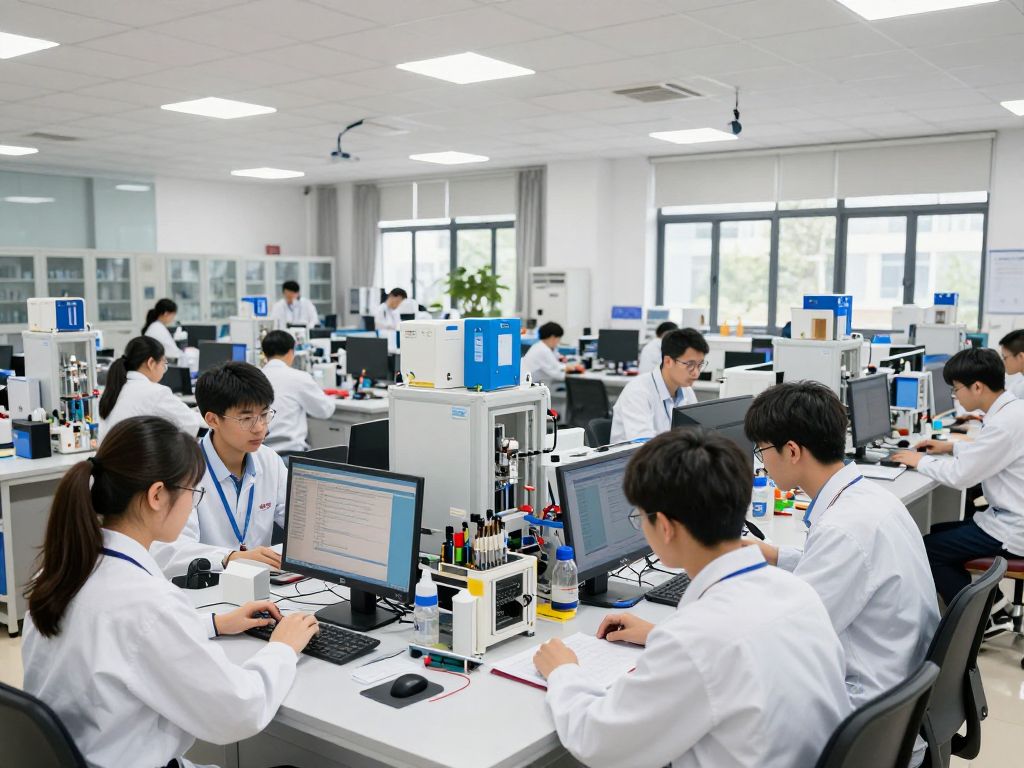
A pivotal development in Texas’s semiconductor ambitions is the allocation of a $4.8 million grant from the Texas Semiconductor Innovation Fund (TSIF) to the Texas Quantum Institute (TQI) at The University of Texas at Austin. This substantial funding is designated for the establishment of QLab, a state-of-the-art quantum-enhanced semiconductor metrology facility in Austin. Metrology, which is the science of precise measurement, has been identified by the U.S. Department of Commerce as a key enabling technology for the semiconductor industry. QLab is designed to advance metrology tools by leveraging new developments in quantum science and technology, addressing critical challenges within semiconductor manufacturing. The facility will be managed by TQI in collaboration with the Microelectronic Research Center (MRC), the Texas Institute for Electronics (TIE), and the Texas Materials Institute (TMI), all integral components of UT Austin’s research infrastructure. Governor Greg Abbott has noted that Texas is emerging as a new frontier of innovation, with UT Austin leading world-changing discoveries in quantum research and development.
A Broader Vision for Texas Microelectronics Leadership
The establishment of QLab builds upon a larger, comprehensive strategy for microelectronics leadership at The University of Texas at Austin. The institution is also central to a significant $1.4 billion, five-year partnership with the Defense Advanced Research Projects Agency (DARPA) to create the nation’s first hub for advanced microelectronics manufacturing. This initiative, part of DARPA’s Next-Generation Microelectronics Manufacturing program, is housed within the Texas Institute for Electronics (TIE), a UT Austin-supported consortium. TIE is focused on developing the next generation of high-performing semiconductor microsystems for the Department of Defense, with an emphasis on 3D Heterogeneous Integration (3DHI) technology. This advanced approach integrates diverse materials and components into microsystems using precision assembly. The Texas Legislature demonstrated strong support for this vision by investing $552 million into TIE, specifically to modernize two UT fabrication facilities, reinforcing the long-term U.S. technology leadership.
Cultivating the Next Generation of Innovators
Recognizing the urgent demand for skilled professionals in this rapidly expanding field, UT Austin is proactively addressing the talent gap through new academic programs. Starting in Fall 2025, the university will offer a new Master of Science in Engineering with a major in semiconductor science and engineering. This program represents the first of its kind in Texas and is among a select few nationwide designed to provide students with a deep understanding of semiconductor science, engineering, and manufacturing. It is a collaborative effort between the Cockrell School of Engineering and the College of Natural Sciences, featuring new coursework developed in partnership with industry leaders such as Apple, Cadence, NXP, and Silicon Labs to modernize semiconductor education. Additionally, a new Minor in Semiconductor Science and Engineering is being offered to undergraduate students, alongside a graduate certificate for continuing education and career advancement.
These initiatives are crucial as the U.S. semiconductor industry is projected to add 31,000 new master’s-level jobs by 2030, with concerns that nearly 40% of these positions could go unfilled due to a lack of qualified candidates. The expansion of career and technical education training programs in public schools statewide further supports this talent pipeline, ensuring that students are prepared for these high-demand fields from earlier stages of their education.
Expertise in STEM Higher Education and Workforce Development
The academic strength underpinning these advancements is exemplified by faculty like Dr. Maura Borrego, who serves as Director of the Center for Engineering Education and Professor of Mechanical Engineering and STEM Education at The University of Texas at Austin. Dr. Borrego’s expertise lies in engineering and STEM higher education, focusing on faculty, graduate students, and undergraduates. Her work, which includes research into factors supporting student success and persistence in engineering, directly informs and strengthens the university’s capacity to prepare a diverse and capable workforce for the semiconductor industry. UT Austin also partners with institutions like Austin Community College (ACC) to provide professional technician training, creating comprehensive educational pathways from technical skills to advanced research.
Economic Impact and State-Level Commitment
The Texas Semiconductor Innovation Fund (TSIF) is a cornerstone of the state’s strategic commitment to this vital industry. Established in June 2023 under the Texas CHIPS Act, the fund initially appropriated $698 million, with an additional $250 million received in June 2025, bringing the total appropriations to approximately $948 million. The TSIF is designed to provide grants to state entities, institutions of higher education, and businesses with an established presence in Texas, supporting semiconductor manufacturing and design projects. This financial backing aims to encourage economic development, attract company expansions, and foster job creation across Texas. Strategic partnerships with major industry players such as Samsung, Advanced Micro Devices Inc., Applied Materials Inc., Intel Corp., and Micron Technology Inc. further illustrate the collaborative ecosystem being built to secure Texas’s long-term technological leadership.
The University of Texas at Austin’s dedication to advancing semiconductor research and education through initiatives like the QLab and the new master’s program reflects a proactive approach to addressing critical national and state needs. By investing in innovation, academic freedom, and rigorous training, UT Austin is not only shaping the future of technology but also developing leaders who exemplify personal responsibility and contribute significantly to community impact. These developments mark an exciting chapter for Texas TX higher education and underscore the state’s growing influence in the global tech landscape.
Readers are encouraged to explore more about University of Texas TX programs, attend virtual campus events, and stay updated on Houston TX college news and the broader UT research initiatives that are propelling Texas forward.
Key Semiconductor Initiatives at UT Austin
| Feature | Detail |
|---|---|
| Grant Amount (QLab) | $4.8 million |
| Grant Program (QLab) | Texas Semiconductor Innovation Fund (TSIF) |
| Recipient (QLab) | Texas Quantum Institute (TQI) at UT Austin |
| Facility Name | QLab |
| Primary Focus (QLab) | Quantum-enhanced semiconductor metrology |
| Total DARPA Partnership | $1.4 billion over five years |
| DARPA Recipient | Texas Institute for Electronics (TIE) at UT Austin |
| DARPA Focus | Advanced microelectronics manufacturing (3DHI technology) |
| New Master’s Program | Master of Science in Engineering with a major in semiconductor science and engineering |
| Master’s Program Start | Fall 2025 |
| Texas CHIPS Act (TSIF) Appropriation | Approx. $948 million (initial $698M + $250M in June 2025) |
Frequently Asked Questions About UT Austin’s Semiconductor Initiatives
Q: What is the QLab facility at UT Austin?
A: QLab is a quantum-enhanced semiconductor metrology facility established at The University of Texas at Austin’s Texas Quantum Institute (TQI) through a $4.8 million grant from the Texas Semiconductor Innovation Fund (TSIF).
Q: What is metrology and why is it important for semiconductors?
A: Metrology is the science of precise measurement and its applications. It is critical in semiconductor manufacturing for measuring materials at the atomic and molecular level, identified by the U.S. Department of Commerce as a key enabling technology for the semiconductor industry.
Q: How much funding did UT Austin receive from the Texas Semiconductor Innovation Fund (TSIF) for QLab?
A: The Texas Quantum Institute at The University of Texas at Austin received a $4.8 million grant from the Texas Semiconductor Innovation Fund (TSIF) for the establishment of QLab.
Q: What is the Texas Semiconductor Innovation Fund (TSIF)?
A: The Texas Semiconductor Innovation Fund (TSIF) is a state-level program established under the Texas CHIPS Act in June 2023. It provides grants to state entities, higher education institutions, and businesses to support semiconductor manufacturing, research, and design projects in Texas, with total appropriations of approximately $948 million.
Q: Is UT Austin involved in other major semiconductor initiatives?
A: Yes, The University of Texas at Austin is also central to a $1.4 billion, five-year partnership with DARPA to establish a national hub for advanced microelectronics manufacturing at its Texas Institute for Electronics (TIE).
Q: What new academic programs is UT Austin offering in semiconductors?
A: Starting in Fall 2025, UT Austin will offer a new Master of Science in Engineering with a major in semiconductor science and engineering, the first of its kind in Texas. A new Minor in Semiconductor Science and Engineering for undergraduates and a graduate certificate are also available.
Q: Who is Dr. Maura Borrego and what is her role?
A: Dr. Maura Borrego is the Director of the Center for Engineering Education and a Professor of Mechanical Engineering and STEM Education at The University of Texas at Austin. Her expertise in STEM higher education supports the development of effective educational strategies for the semiconductor workforce.
Deeper Dive: News & Info About This Topic
HERE Resources
UT Austin Secures $4.8 Million for Quantum Initiative
UT Austin Plans New Center for Research Excellence
Central Texas Welcomes New South Korean Partnerships
Apple Increases Manufacturing Investment in Texas
Apple Announces $100 Billion Investment in U.S. Manufacturing
Apple Makes Major Investment in U.S. Manufacturing
Houston’s Tech Employment Continues to Grow
Texas Legislative Session Boosts Houston’s Economic Growth
Texas Companies Shine on Forbes’ Global 2000 List
Bastrop Welcomes SpaceX Expansion

Author: STAFF HERE HOUSTON TX WRITER
The HOUSTON STAFF WRITER represents the experienced team at HEREHouston.com, your go-to source for actionable local news and information in Houston, Harris County, and beyond. Specializing in "news you can use," we cover essential topics like product reviews for personal and business needs, local business directories, politics, real estate trends, neighborhood insights, and state news affecting the area—with deep expertise drawn from years of dedicated reporting and strong community input, including local press releases and business updates. We deliver top reporting on high-value events such as Houston Livestock Show and Rodeo, Art Car Parade, and Chevron Houston Marathon. Our coverage extends to key organizations like the Greater Houston Partnership and Houston Area Urban League, plus leading businesses in energy and healthcare that power the local economy such as ExxonMobil, Schlumberger, and Houston Methodist. As part of the broader HERE network, including HEREAustinTX.com, HERECollegeStation.com, HEREDallas.com, and HERESanAntonio.com, we provide comprehensive, credible insights into Texas's dynamic landscape.