

News Summary
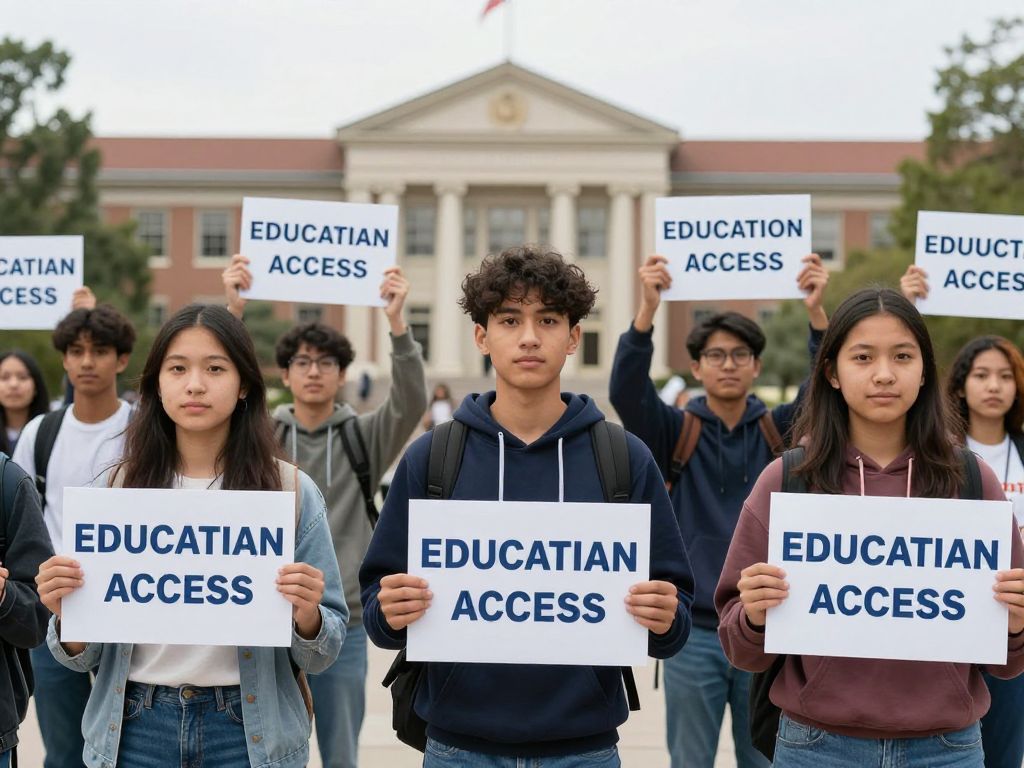
The University of Texas community is actively advocating for policies that support educational access following recent legal challenges to the Texas Dream Act. The reversal of the act significantly impacts thousands of undocumented students facing higher tuition costs. Students and organizations, like Sigma Lambda Beta and Rooted, are leading efforts to raise funds and lobby for legislative support. These initiatives highlight the importance of civic engagement and the commitment of the UT community towards maintaining educational opportunities for all Texas students.
Houston, TX — In an era where higher education plays a pivotal role in shaping both individual futures and the state’s economic landscape, the University of Texas (UT) community, including student fraternities and other organizations, has demonstrated a principled commitment to advocating for policies that support educational access. Recent developments concerning the Texas Dream Act have ignited active engagement among students, underscoring their dedication to academic freedom, personal responsibility, and community impact within Texas higher education. These efforts reflect a proactive approach to civic engagement, aiming to uphold pathways to opportunity for a diverse student body.
The spirit of leadership and a profound sense of communal responsibility are evident as UT students navigate complex policy discussions. Their involvement highlights a belief that educational opportunities should remain accessible to qualified students who have grown up in Texas, contributing to the state’s intellectual capital and future workforce. This engagement goes beyond campus borders, influencing broader conversations about the future of Texas and its standing as a leader in educational excellence and economic vitality.
The Texas Dream Act: A Foundation for Opportunity
The Texas Dream Act, formally known as House Bill 1403, was enacted in 2001, making Texas the first state in the nation to pass such legislation. Signed into law by Governor Rick Perry, this bipartisan measure allowed students who did not possess legal immigration status to qualify for in-state tuition rates at public colleges and universities in Texas. To be eligible, students needed to meet specific criteria: they had to be dependents of a parent or guardian residing in Texas while in high school, graduate from a Texas high school or obtain a GED certificate, reside in Texas for at least three years prior to high school graduation, register with a Texas public college or university starting in the fall of 2001, and file an application to seek permanent residency in the United States. This policy aimed to integrate high school graduates into the state’s higher education system, recognizing their contributions to the community and their potential as future professionals.
Recent Legal Challenge and Its Implications
In June 2025, a significant legal development reshaped the landscape of in-state tuition in Texas. A federal judge invalidated the Texas Dream Act, effectively ending the provision of in-state tuition for most undocumented students. This decision stemmed from a lawsuit filed by the U.S. Justice Department, which argued that the Dream Act unlawfully provided benefits to non-citizens not offered to U.S. citizens. Texas Attorney General Ken Paxton did not contest the decision, leading to a swift blocking of the 24-year-old law. The ruling specifically targets “aliens who are not lawfully present in the United States,” leaving some immigrant students, such as DACA recipients and visa holders, still potentially eligible for in-state tuition. However, the lack of clear state guidance has created considerable confusion among universities and students regarding eligibility.
Direct Impact on Students and State Economy
The reversal of the Texas Dream Act has had immediate and substantial consequences for thousands of students across the state. Approximately 57,000 undocumented students enrolled in Texas colleges or universities were impacted by the lawsuit ending the Texas Dream Act. Other estimates suggest about 73,000 students previously qualified for in-state tuition under the law. Affected students are now facing significantly higher tuition costs, often three to four times their previous in-state rates. For instance, undergraduate business students at UT Austin, who previously paid over $6,700 per semester as residents, could now face charges exceeding $25,000 per semester as non-residents. Beyond tuition, these students also lost access to the Texas Application for State Financial Aid, increasing their reliance on private scholarships and student-led funds.
Economically, the implications extend to the entire state. The American Immigration Council projects that Texas could experience an annual loss of over $460 million in economic activity, comprising $244.4 million in lost wages and $216.9 million in spending power. A college degree has been shown to increase the earning potential by 57% for students without legal status, highlighting the long-term benefits of accessible higher education for the state’s workforce and tax base. This economic perspective underscores the value of educational pathways in fostering a robust and skilled workforce for Texas.
| Category | Details |
|---|---|
| Students Impacted (Est.) | 57,000 – 73,000 students in Texas colleges/universities |
| Tuition Cost Increase | 3-4 times higher for affected students. Example: $6,700 to $25,000+ per semester for UT Austin undergraduate business students. |
| Financial Aid Access | Loss of access to Texas Application for State Financial Aid |
| Estimated Annual Economic Loss for Texas | Over $460 million ($244.4 million in lost wages, $216.9 million in spending power) |
| Increased Earning Potential with Degree | 57% for students without legal status |
Student Organizations Lead Advocacy Efforts
In response to these challenges, students at the University of Texas and other institutions have rallied to advocate for their peers, embodying principles of personal responsibility and civic engagement. The UT chapter of Sigma Lambda Beta, a predominantly Latino fraternity, took a prominent role in these efforts. On April 22, 2025, members of the fraternity lobbied state lawmakers and testified before the Texas Senate Education Committee, speaking against proposed legislation that aimed to neutralize the Texas Dream Act. Marco Julian Gonzalez, a member of Sigma Lambda Beta, spearheaded these advocacy initiatives, bringing together 15 students from his organization and other advocates across UT. These students engaged directly with staffers from various legislative offices, sharing personal stories and highlighting the real-world implications of policy changes. Such direct engagement demonstrates the discipline and initiative of students committed to influencing policy through democratic processes.
Community Support and Fundraising Initiatives
Beyond legislative advocacy, UT students and alumni have mobilized to provide tangible support. Organizations like Rooted, a coalition of immigrant UT students and alumni, have launched fundraising campaigns to help bridge the financial gap created by the tuition increase. Since August 2025, Rooted has raised over $12,000 to assist undocumented students with tuition costs and essential needs such as rent and groceries. Similarly, Texas Students for DEI, an organization originating at UT and expanding statewide, has raised over $19,000, prioritizing support for students at community colleges and institutions without dedicated funds. Together, these two student-led initiatives have collectively raised over $30,000, demonstrating the power of community action and shared responsibility in addressing pressing challenges. These grassroots efforts exemplify the students’ commitment to ensuring that a financial barrier does not derail academic aspirations.
Broader Commitment to Student Success in Texas Higher Education
The University of Texas at Austin maintains a broad commitment to student success through various initiatives that support educational attainment and foster future leadership. Programs such as the Office of Student Success provide resources for enrollment, retention, and timely graduation, creating supportive communities and offering academic assistance. The Institute for Public School Initiatives (IPSI), a center within the UT College of Education, focuses on increasing post-secondary opportunities for public school students through college awareness, readiness, and educator development. Additionally, programs like the Darren Walker Scholars program and UT for Me – Powered by Dell Scholars offer comprehensive financial and personalized support to students with significant financial need, aiming to close graduation gaps and develop future leaders. These institutional efforts, alongside the student-led advocacy, illustrate a multifaceted dedication to ensuring that talented individuals can pursue their academic and professional goals, ultimately enriching the Houston and broader Texas communities.
Conclusion
The ongoing dialogue surrounding the Texas Dream Act and its recent legal challenges has brought into sharp focus the dedication of University of Texas students and their organizations. Through determined advocacy, legislative engagement, and vital fundraising, these students are demonstrating commendable leadership and a strong sense of personal responsibility in confronting issues that directly impact educational access for their peers. Their actions reinforce the importance of academic freedom and highlight how engaged student communities are vital to the continuous improvement of Texas higher education.
Readers are encouraged to remain informed about the evolving landscape of Texas TX higher education and to explore the diverse programs and initiatives offered by the University of Texas TX and other institutions. Supporting student organizations focused on academic and community impact helps foster a vibrant and inclusive environment for all aspiring scholars. Stay updated on Houston TX college news to learn more about how university communities continue to contribute to the social and economic fabric of our state.
SEO Keywords: University of Texas TX, Houston TX college news, Texas TX higher education, UT research, Texas Dream Act.
Frequently Asked Questions
What is the Texas Dream Act?
The Texas Dream Act, also known as House Bill 1403, was a law passed in 2001 that allowed eligible students, regardless of their immigration status, to pay in-state tuition rates at public colleges and universities in Texas if they met specific residency and high school graduation criteria.
When was the Texas Dream Act overturned?
A federal judge invalidated the Texas Dream Act in June 2025, ending in-state tuition for most undocumented students.
How many students were affected by the ruling?
Approximately 57,000 undocumented students enrolled in Texas colleges or universities were impacted by the lawsuit ending the Texas Dream Act. Other estimates suggest about 73,000 students previously qualified for in-state tuition under the law.
What is the economic impact of the ruling on Texas?
The American Immigration Council estimates that Texas could face an annual loss of over $460 million in economic activity, including $244.4 million in lost wages and $216.9 million in spending power, due to the ruling.
Which UT student organizations are involved in advocacy and support?
The UT chapter of Sigma Lambda Beta fraternity has actively lobbied lawmakers and testified before legislative committees. Student-led organizations like Rooted (a coalition of immigrant UT students and alumni) and Texas Students for DEI have launched fundraising initiatives to support affected students.
Do DACA recipients still qualify for in-state tuition in Texas?
Yes, the ruling specifically blocks the Texas Dream Act as applied to “aliens who are not lawfully present in the United States,” meaning DACA recipients and other lawfully present immigrant students may still qualify for in-state tuition. However, there has been confusion among universities due to a lack of clear state guidance.
Deeper Dive: News & Info About This Topic
HERE Resources
Houston Cougars School Basketball Team Dominates Cincinnati
Houston’s Montana Wheeler: Rising Star in High School Basketball
Biscuit Belly Introduces Southern Brunch to Houston
Dallas School Talents Shine in Super Bowl LX
High School Football’s Role in Shaping NFL Stars
Mean Green Dominate: Stevenson Powers North Texas Past UTSA
Dallas Area Schools Showcase Basketball Talent
Houston Engages in Debate Over Proposed Nationwide Ban on Real Estate Investors
Coastal Bend’s ‘Gulf Coast Idol’ Showcases Local Talent
Texas Purple Kings Battle Alamo City All-Stars in Houston

Author: STAFF HERE HOUSTON TX WRITER
The HOUSTON STAFF WRITER represents the experienced team at HEREHouston.com, your go-to source for actionable local news and information in Houston, Harris County, and beyond. Specializing in "news you can use," we cover essential topics like product reviews for personal and business needs, local business directories, politics, real estate trends, neighborhood insights, and state news affecting the area—with deep expertise drawn from years of dedicated reporting and strong community input, including local press releases and business updates. We deliver top reporting on high-value events such as Houston Livestock Show and Rodeo, Art Car Parade, and Chevron Houston Marathon. Our coverage extends to key organizations like the Greater Houston Partnership and Houston Area Urban League, plus leading businesses in energy and healthcare that power the local economy such as ExxonMobil, Schlumberger, and Houston Methodist. As part of the broader HERE network, including HEREAustinTX.com, HERECollegeStation.com, HEREDallas.com, and HERESanAntonio.com, we provide comprehensive, credible insights into Texas's dynamic landscape.