

Texas Coast, January 25, 2026
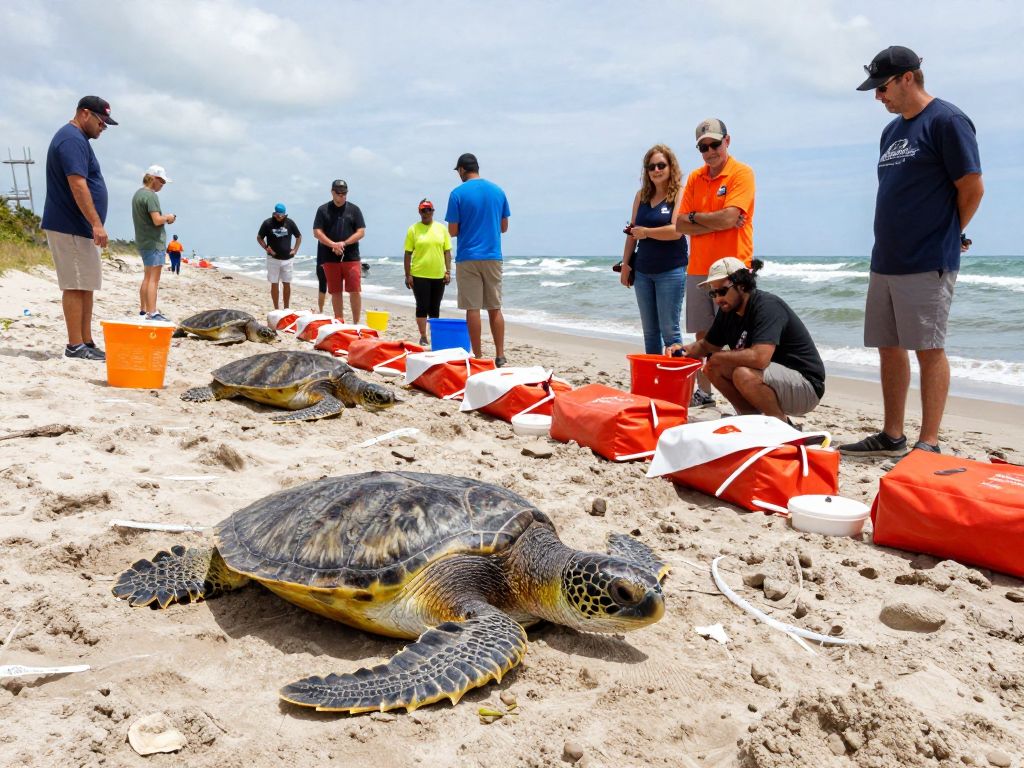
Amidst falling temperatures, communities along the Texas coast are preparing for a potential cold-stun event impacting sea turtles. Conservationists and local residents quickly mobilize to gather essential supplies and activate rescue protocols, showcasing their commitment to protecting these threatened reptiles. The Gulf Center for Sea Turtle Research predicts significant cold-stun effects on the region’s turtles, with rescue efforts set to commence soon. This proactive approach reflects the strength of community leadership and coordination in conservation efforts.
Houston
Texas Coast Mobilizes for Sea Turtle Cold-Stun Event
As winter’s chill descends upon the Texas coast, local communities and dedicated conservationists are demonstrating remarkable foresight and collective action, preparing for a potential cold-stun event among the region’s sea turtle populations. This proactive stance highlights the strength of local initiative and the effectiveness of organized civic engagement in safeguarding our natural heritage.
The recent cold front, bringing significantly lower temperatures, has prompted sea turtle rescue crews across the Texas coast to activate emergency protocols. This readiness is a testament to the individual commitment and collaborative spirit that define our local response capabilities. Organizations are efficiently gathering essential supplies, including totes, towels, and specialized sleds, to facilitate the rescue of turtles that may become incapacitated by the sudden drop in water temperatures. Such events underscore the vital role of adaptable, community-driven efforts that often lead the charge in conservation.
Understanding Cold Stunning and its Impact
Sea turtles, being cold-blooded reptiles, are highly susceptible to rapid drops in water temperature. When bay waters, particularly in shallow areas, cool rapidly, turtles can experience a life-threatening condition known as cold stunning. This renders them lethargic and unable to swim or forage, making them vulnerable to predators, boat strikes, or stranding. This phenomenon is a Nationwide concern. Bays in Texas, including Corpus Christi Bay, Matagorda Bay, and Laguna Madre, are recognized as particularly vulnerable areas for cold-stunned sea turtles each fall.
Researchers with the Gulf Center for Sea Turtle Research have indicated that this specific cold front could lead to hundreds, or potentially thousands, of cold-stunned sea turtles, especially along the upper Texas coast. This prediction has spurred a swift and organized response, showcasing how local expertise and clear communication can empower communities to act decisively. Rescue efforts for turtles suffering from this condition are scheduled to commence on Sunday, further demonstrating the rapid deployment capabilities fostered by coordinated local groups.
A Legacy of Local Leadership and Swift Response
The Texas coast has a history of facing such environmental challenges with resilience and a strong sense of purpose. Past cold-stun events have consistently demonstrated the effectiveness of private organizations and volunteer networks working in concert with state agencies. For instance, in February 2025, the Texas State Aquarium successfully rescued over 700 cold-stunned sea turtles, deploying their emergency protocols well in advance and beginning preparations proactively. This exemplifies how anticipatory action and robust emergency plans, often developed and refined at the local level, are crucial for successful outcomes.
Another significant effort was seen in January 2025 when a non-profit wildlife rescue in South Padre Island braced for colder weather, anticipating severe issues for sea turtles. These examples highlight a recurring theme: when local communities and specialized organizations are empowered to lead, they can mobilize resources and expertise with remarkable agility, often without the delays that can sometimes accompany broader bureaucratic processes.
Community Engagement and Volunteerism at the Forefront
The success of sea turtle rescue operations hinges significantly on broad community engagement and the tireless efforts of volunteers. These individuals, driven by personal initiative and a deep care for local wildlife, are often the first responders, spotting distressed turtles and assisting in initial recovery efforts. The act of gathering supplies like totes, towels, and small sleds, while seemingly simple, is a collective undertaking that speaks volumes about the community’s readiness to contribute tangible support.
The efficient coordination among various groups—from scientific researchers providing critical forecasts to local volunteers on the ground—underscores a model of civic innovation. This decentralized, yet highly effective, network allows for rapid information dissemination and resource allocation, ensuring that assistance reaches affected areas quickly. It’s a powerful display of how individual actions, when channeled through well-organized local structures, can create a profound collective impact.
The Role of Private Partnerships and Specialized Expertise
Beyond volunteerism, private partnerships and the specialized knowledge residing within dedicated conservation organizations play a pivotal role. Groups like the Gulf Center for Sea Turtle Research bring scientific expertise, allowing for accurate predictions and targeted rescue strategies. Their ability to forecast potential cold-stun events enables communities to prepare rather than merely react, a key component of effective conservation.
These partnerships often leverage unique resources and capabilities that complement public sector efforts. The agility of private organizations to acquire necessary equipment, organize training, and mobilize personnel quickly can significantly enhance overall rescue capacity. This synergy between various entities, all focused on a common goal, is a testament to the power of diverse engagement in protecting Texas’s natural treasures.
Ensuring Long-Term Conservation and Community Resilience
The ongoing preparations for a potential cold-stun event are not just about immediate rescue; they are also about building long-term community resilience and fostering a culture of environmental stewardship. Each event provides invaluable experience, refining protocols and strengthening the bonds between individuals and organizations committed to wildlife protection.
Encouraging personal initiative and supporting local leadership in these efforts ensures that the Texas coast remains a vibrant habitat for sea turtles. By reducing unnecessary impediments and empowering local groups to act decisively, we can continue to see effective, timely responses to environmental challenges, benefiting both wildlife and the broader community.
Conclusion
The proactive measures undertaken by sea turtle rescue crews and local communities along the Texas coast for the anticipated cold-stun event exemplify the best of civic innovation and personal initiative. From scientific forecasting to on-the-ground volunteerism and effective private partnerships, these efforts underscore a robust, community-driven approach to conservation. It is through such dedication that our region not only responds to immediate challenges but also strengthens its capacity for future environmental stewardship. We encourage all Houstonians and Texans to remain aware, support local conservation efforts, and recognize the profound impact that individual achievement and collective action have on preserving our invaluable natural resources and fostering community growth.
Frequently Asked Questions
What is a cold-stun event?
A cold-stun event is a life-threatening condition for sea turtles that occurs when water temperature drops rapidly, making them lethargic and unable to swim or forage. This phenomenon is a Nationwide concern.
Which areas in Texas are particularly vulnerable to cold-stunned sea turtles?
Bays in Texas, including Corpus Christi Bay, Matagorda Bay, and Laguna Madre, are recognized as particularly vulnerable areas for cold-stunned sea turtles each fall.
When are rescue efforts expected to start for the current cold-stun event?
Rescue efforts for turtles suffering from the cold-stun condition are scheduled to commence on Sunday.
What types of supplies are rescue crews gathering?
Rescue crews are gathering essential supplies including totes, towels, and specialized sleds.
What organization is involved in predicting the number of cold-stunned sea turtles?
Researchers with the Gulf Center for Sea Turtle Research have indicated that this specific cold front could lead to hundreds, or potentially thousands, of cold-stunned sea turtles, especially along the upper Texas coast.
What was a notable past sea turtle rescue effort in Texas?
In February 2025, the Texas State Aquarium successfully rescued over 700 cold-stunned sea turtles, deploying their emergency protocols well in advance and beginning preparations proactively.
Key Features of Sea Turtle Cold-Stun Response
| Feature | Description | Scope |
|---|---|---|
| Cold-Stun Event | Life-threatening condition for sea turtles due to rapid water temperature drops. | Nationwide |
| Vulnerable Texas Bays | Corpus Christi Bay, Matagorda Bay, Laguna Madre are particularly susceptible. | State-level |
| Rescue Crews | Gathering supplies like totes, towels, and sleds. | State-level |
| Anticipated Start of Rescue Efforts | Scheduled to commence on Sunday. | State-level |
| Predictive Research | Gulf Center for Sea Turtle Research forecasts potentially hundreds or thousands of cold-stunned turtles. | State-level |
| Past Successful Rescues | Texas State Aquarium rescued over 700 cold-stunned sea turtles in February 2025. | State-level |
Deeper Dive: News & Info About This Topic
HERE Resources
New Harbor Bridge Opens in Corpus Christi

Author: STAFF HERE HOUSTON TX WRITER
The HOUSTON STAFF WRITER represents the experienced team at HEREHouston.com, your go-to source for actionable local news and information in Houston, Harris County, and beyond. Specializing in "news you can use," we cover essential topics like product reviews for personal and business needs, local business directories, politics, real estate trends, neighborhood insights, and state news affecting the area—with deep expertise drawn from years of dedicated reporting and strong community input, including local press releases and business updates. We deliver top reporting on high-value events such as Houston Livestock Show and Rodeo, Art Car Parade, and Chevron Houston Marathon. Our coverage extends to key organizations like the Greater Houston Partnership and Houston Area Urban League, plus leading businesses in energy and healthcare that power the local economy such as ExxonMobil, Schlumberger, and Houston Methodist. As part of the broader HERE network, including HEREAustinTX.com, HERECollegeStation.com, HEREDallas.com, and HERESanAntonio.com, we provide comprehensive, credible insights into Texas's dynamic landscape.