

News Summary
NASA’s Johnson Space Center and the University of Texas System have formalized a collaborative agreement to enhance research and workforce development. This strategic alliance aims to support human spaceflight missions and nurture the next generation of talent in aerospace. With a history of partnership, this agreement bolsters educational initiatives and expands research opportunities, reflecting Texas’s leadership in space exploration and innovation.
Houston, TX — The landscape of higher education and scientific advancement in Texas has been further solidified with a pivotal agreement between the National Aeronautics and Space Administration’s (NASA) Johnson Space Center in Houston and the University of Texas System (UT System). This collaboration, formalized through a Space Act Agreement, represents an expanded commitment to research and workforce development, underscoring the vital role of academic institutions in national endeavors.
For decades, NASA and the UT System have cultivated a robust partnership, working in concert to push the boundaries of human knowledge and technological capability. This latest agreement builds upon that foundation, strategically enabling additional avenues for research, enhancing teaching resources, and fostering educational engagements critical for supporting human spaceflight missions and nurturing the talent pipeline for future generations. This forward-thinking initiative is poised to significantly impact University of Texas TX students, faculty, and the broader Texas community, reinforcing the state’s position as a hub of innovation and leadership in the aerospace sector.
A Legacy of Partnership for Future Frontiers
On January 9, 2026, NASA Johnson Space Center Director Vanessa Wyche and University of Texas System Chancellor John M. Zerwas formalized a collaborative Space Act Agreement, marking a new chapter in a long-standing relationship. This agreement is designed to expand research and workforce development opportunities across NASA centers and the extensive network of UT System facilities. The collaboration is set to leverage the unique capabilities of Johnson Space Center as a central hub for human spaceflight, alongside the comprehensive assets spread across the UT System’s 13 institutions.
This strategic alliance recognizes the critical importance of a coordinated approach to advance national exploration goals and secure the future of space exploration. It empowers both entities to pool expertise and resources, driving progress in scientific discovery and technological innovation.
Fueling Next-Generation Research & Innovation
The expanded partnership opens new horizons for cutting-edge research and technology development. Key areas of focus include initiatives that support human spaceflight, with a continuous emphasis on biomedical research to promote astronaut health. Earth observations also feature prominently, enhancing understanding of the planet and its dynamic systems.
Historically, collaborations with entities like NASA’s Jet Propulsion Laboratory have encompassed a wide array of advanced technologies such as robotics, nanosatellites, communication and navigation systems, entry descent and landing systems, materials science, nanotechnology, and high-precision mapping. These diverse fields of study provide fertile ground for the intellectual rigor and disciplined inquiry that define academic excellence within the Texas TX higher education system. Furthermore, the Texas Space Commission, established in 2023, has already demonstrated its commitment to advanced research by approving a $9.27 million grant to UT Austin for orbital object tracking research, a critical area for space domain awareness.
Building the Aerospace Workforce Pipeline
A core objective of this collaboration is to cultivate the next generation of scientific and engineering talent. NASA actively seeks to create an employment pipeline for its future workforce, and universities play a crucial role in this endeavor.
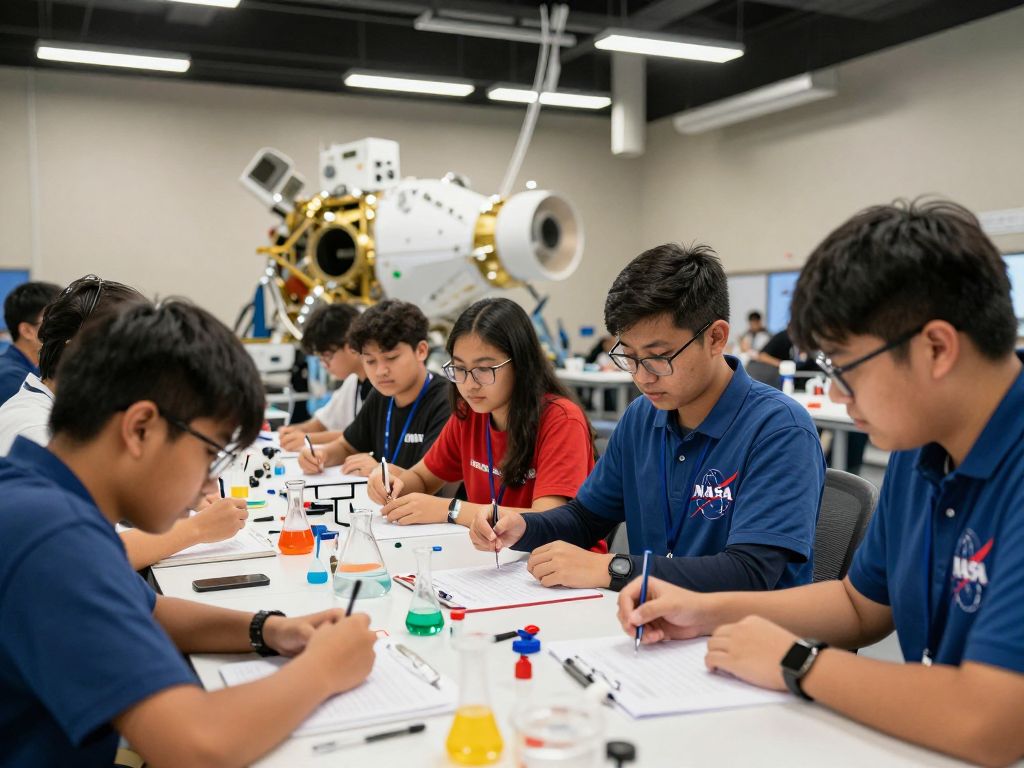
A notable example is the NASA STEM Enhancement of Earth Science (SEES) Summer Intern Program, led by the UT Center for Space Research (CSR) at UT Austin. This nationally competitive program provides high school students with invaluable exposure to Earth and space research, allowing them to work directly with experts from NASA, industry, and academia. A 2010 grant facilitated the expansion of the SEES program, offering work experience and research opportunities focused on Earth science, specifically aiming to increase participation from under-represented minorities in STEM careers. The program boasts an impressive track record, with 100% of participating students progressing to college and 96% pursuing STEM degrees. Additionally, the SEES Student Microgravity Research Program offers a unique opportunity for students to conduct research in a microgravity environment onboard a parabolic aircraft.
Beyond high school, NASA supports a variety of opportunities for university and college students, including summer internships, the Human Lander Challenge, and the Revolutionary Aerospace Systems Concepts – Academic Linkage (RASC-AL) competition. These programs encourage students to develop next-generation solutions for both Earth and deep-space exploration, fostering personal responsibility and a strong work ethic. Research opportunities at minority institutions, in particular, are instrumental in attracting talented students to pursue and complete advanced degrees in STEM disciplines.
Texas at the Forefront of Space Enterprise
Texas is strategically positioned as a central figure in America’s space future, with significant investments and initiatives reinforcing its leadership. The establishment of the Texas Space Commission in 2023 underscores the state’s dedication to supporting space-related advancements. Regional development projects further amplify this commitment; for instance, El Paso County received an $800,000 award from the Texas Space Commission to fund the development of the West Texas Aerospace Corridor Master Plan. This plan focuses on infrastructure, research, workforce training, and innovation, including efforts to transition military veterans into high-paying aerospace careers. Furthermore, the ongoing development of Exploration Park, a substantial 207-acre aerospace campus adjacent to NASA’s Johnson Space Center, signifies a tangible commitment to advancing the commercial space sector and fostering collaborations.
Innovation stemming from UT research also contributes to the state’s aerospace ecosystem. The University of Texas at Austin has seen startups like Supra Elemental Recovery Inc. emerge from its engineering and natural sciences labs. This company is commercializing technology to recover critical minerals essential for high-tech, aerospace, and defense industries, aiming to strengthen the domestic supply chain and reduce reliance on foreign markets.
Cultivating Leadership and Community Impact
This expanded partnership between NASA Johnson Space Center and the UT System extends beyond scientific discovery; it is a testament to the power of collaboration in building leadership and fostering community impact. By providing students with hands-on experience, advanced research opportunities, and direct engagement with national space missions, Texas higher education institutions are instilling the discipline and personal responsibility necessary for future leaders.
The synergy between government agencies, academic institutions, and industry stakeholders in Houston and across Texas is creating a dynamic environment where innovation thrives, driving economic growth and ensuring American dominance in space exploration. This commitment to academic freedom and rigorous inquiry not only prepares students for successful careers but also enriches the entire state by contributing to a skilled workforce and groundbreaking technological advancements.
Readers are encouraged to explore the diverse programs offered by the University of Texas System institutions, attend campus events that showcase ongoing research, and stay informed about the continuous advancements emanating from Houston’s vibrant college community.
Keywords: University of Texas TX, Houston TX college news, Texas TX higher education, UT research
Summary of Partnership Features
| Feature | Details | Scope |
|---|---|---|
| Agreement Type | Space Act Agreement | State-level |
| Signing Date | January 9, 2026 | State-level |
| Key Signatories | Vanessa Wyche (JSC), John M. Zerwas (UT System) | State-level |
| UT System Institutions Involved | 13 | State-level |
| SEES Program Focus | STEM for High School Students | Nationwide |
| UT Austin Grant (orbital tracking) | $9.27 million from Texas Space Commission | State-level |
Frequently Asked Questions
What is the new agreement between NASA and the University of Texas System?
A collaborative Space Act Agreement was signed on January 9, 2026, between NASA’s Johnson Space Center in Houston and the University of Texas System. The agreement expands research and workforce development partnership opportunities across NASA centers and UT System facilities.
Who signed the Space Act Agreement?
The agreement was signed by NASA Johnson Space Center Director Vanessa Wyche and University of Texas System Chancellor John M. Zerwas.
What are the primary goals of this expanded partnership?
The agreement aims to enable additional research, teaching resources, and educational engagements that support human spaceflight and grow the pipeline of next-generation talent.
What types of research areas will the partnership focus on?
The partnership will focus on vital research and technology development initiatives to meet national exploration goals, including biomedical research to promote astronaut health and Earth observations. Historically, collaborations have included robotics, nanosatellites, communication and navigation, entry descent and landing systems, materials and structures, nanotechnology, and high-precision mapping.
How does the partnership support student development and workforce readiness?
The partnership creates an employment pipeline for NASA’s future workforce. Programs like the nationally competitive NASA STEM Enhancement of Earth Science (SEES) Summer Intern Program, led by the UT Center for Space Research at UT Austin, provide high school students with exposure to Earth and space research and opportunities to work with experts. NASA also offers various student challenges, internships, and competitions for university and college students.
Deeper Dive: News & Info About This Topic
HERE Resources
UIL Realignment Reshapes DFW High School Sports
UIL Realignment Reshapes Texas High School Athletics
Houston’s Winter Resilience: Community Action Shines
UT Austin Advances in Research Commercialization
UT Austin Undergraduate Researchers Impact Global Health
UT McCombs to Relocate Houston MBA Program at CityCentre
Houston Set to Host Premier MBA Event, Bolstering Local Professional Growth
Houston’s Cultural Festivities Showcase Vibrant Arts Scene
Legislative Changes Impact Scholarships at Texas Universities
University of Texas System Partners with NASA for Space Act Agreement

Author: STAFF HERE HOUSTON TX WRITER
The HOUSTON STAFF WRITER represents the experienced team at HEREHouston.com, your go-to source for actionable local news and information in Houston, Harris County, and beyond. Specializing in "news you can use," we cover essential topics like product reviews for personal and business needs, local business directories, politics, real estate trends, neighborhood insights, and state news affecting the area—with deep expertise drawn from years of dedicated reporting and strong community input, including local press releases and business updates. We deliver top reporting on high-value events such as Houston Livestock Show and Rodeo, Art Car Parade, and Chevron Houston Marathon. Our coverage extends to key organizations like the Greater Houston Partnership and Houston Area Urban League, plus leading businesses in energy and healthcare that power the local economy such as ExxonMobil, Schlumberger, and Houston Methodist. As part of the broader HERE network, including HEREAustinTX.com, HERECollegeStation.com, HEREDallas.com, and HERESanAntonio.com, we provide comprehensive, credible insights into Texas's dynamic landscape.