

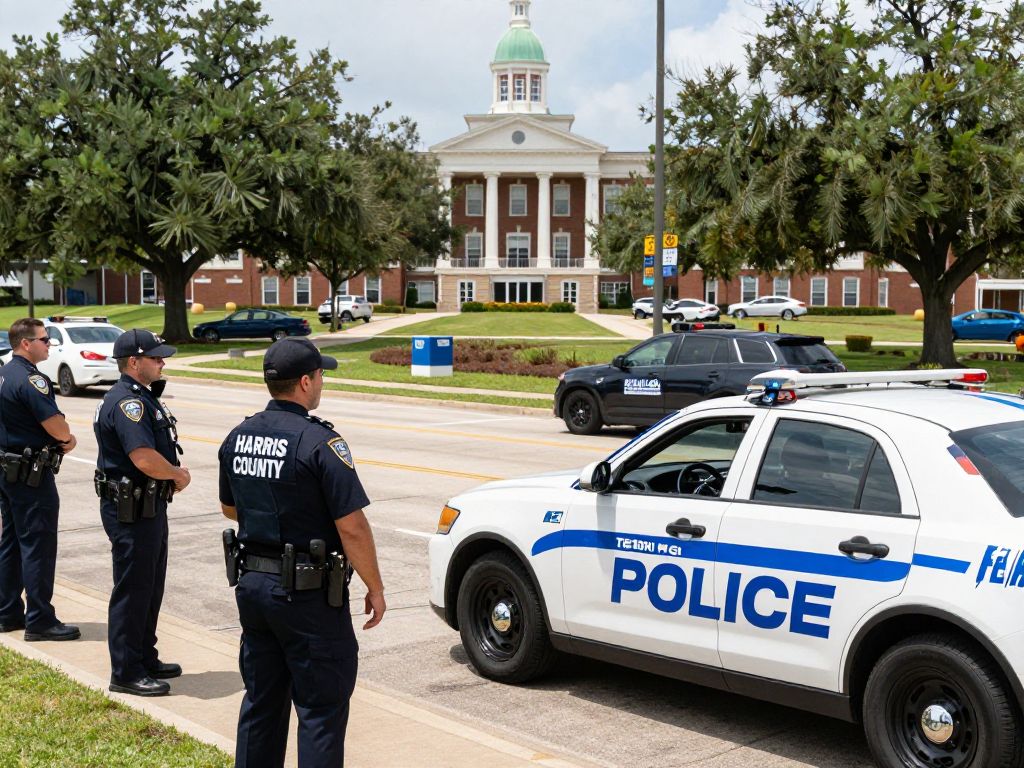
Harris County, Texas, January 29, 2026
Harris County officials are alarmed by a new state law allowing constables to negotiate patrol contracts independently, which they fear could adversely impact county finances. The law, effective as of December 4, enables constables to set terms with property associations and local governments without approval from the Commissioners Court. Alarmed by the potential for increased expenses, officials highlight their previous budget concerns amidst recent substantial raises for law enforcement salaries.
Houston, Texas – Harris County leaders are sounding the alarm over a new state law that they say could significantly increase the county’s expenses for constable patrol services. This legislation, which became law on December 4, 2025, allows constables to negotiate patrol contracts directly with entities like homeowner associations without requiring approval from the Commissioners Court, a change that officials fear will burden the county budget.
New Law Raises Budget Concerns
The core of the concern revolves around House Bill 26, a state law applicable only to counties with a population greater than 3.3 million, which currently includes Harris County. This law permits sheriffs and constables to independently enter into agreements with property owners’ associations, local governments, and private landowners for law enforcement services. Crucially, the law removes the Commissioners Court’s authority to prohibit or restrict these contracts or their terms.
County officials, including Commissioner Adrian Garcia, who previously served as Harris County sheriff, have labeled the new measure a “budget killer.” They worry that constables could offer contracts with lower rates to organizations, thereby increasing the portion of the cost that the county must subsidize. For instance, if a constable charges an organization only 10% of a deputy’s salary, the county would be responsible for the remaining 90%.
Financial Implications and Past Context
In 2025, Harris County contributed $37.8 million in contract patrol subsidies for both the sheriff’s office and the eight constable precincts combined, while residents and community organizations covered $111.6 million of the program’s total cost. The fear is that the new law could drastically alter this split, forcing the county to absorb a larger share. County leaders have reportedly urged constables to avoid signing contracts where the county’s responsibility exceeds 60% of the cost.
This development follows earlier discussions and actions regarding law enforcement pay. In May 2025, Harris County constables advocated for deputy pay raises to match increases for Houston Police Department (HPD) officers, a move that would have required an additional $142 million in the first year for the county to achieve pay parity. Later, in August 2025, Harris County Commissioners approved pay raises for the county’s eight elected constables, with salaries increasing from approximately $180,000 to nearly $300,000, despite a projected $200 million budget deficit at the time. The recent legislation became law just months after these significant raises were approved for county law enforcement, including constables and sheriff’s deputies.
Historical Perspective and Current Operations
Harris County has a long-standing “contract deputy” program, unique in its scale compared to other Texas counties, dating back to the 1970s and 1980s. This program allows neighborhoods and other entities to contract for supplemental patrol services. Traditionally, the cost of these services has been split, with the contracting entity typically paying around 70% and Harris County covering the remaining 30%. The concern now is that the new law bypasses the Commissioners Court’s oversight, potentially disrupting the established financial model and accountability.
Frequently Asked Questions (FAQ)
What is the new state law affecting Harris County patrol costs?
The new state law is House Bill 26, which became law on December 4, 2025. It allows sheriffs and constables in counties with a population greater than 3.3 million (currently only Harris County) to enter into contracts with property owners’ associations, local governments, and private landowners for law enforcement services without requiring approval from the Commissioners Court.
Why are Harris County leaders concerned about this law?
Harris County leaders are concerned that the new law could significantly increase the county’s financial burden for funding constable patrol services. They fear constables could offer contracts with lower rates to organizations, forcing the county to subsidize a larger portion of deputy salaries, potentially making it a “budget killer”.
Who is Commissioner Adrian Garcia?
Commissioner Adrian Garcia is a Harris County leader who previously served as Harris County sheriff. He is among those voicing concerns and has labeled the new legislation a “budget killer.”
What was the previous cost split for contract patrol services in Harris County?
Traditionally, the cost of contract patrol services in Harris County has been split, with the contracting entity typically paying around 70% and Harris County covering the remaining 30%. In 2025, Harris County contributed $37.8 million, while residents and community organizations covered $111.6 million.
What is the ‘contract deputy’ program in Harris County?
The ‘contract deputy’ program is a long-standing initiative in Harris County that allows neighborhoods, homeowner associations, municipal utility districts, and other entities to contract for supplemental patrol services from constables and the sheriff’s office.
Key Features of the New Constable Contract Law (House Bill 26)
| Feature | Description | Applicability |
|---|---|---|
| Direct Contract Negotiation | Allows sheriffs and constables to negotiate patrol contracts directly with property owners’ associations, local governments, and private landowners. | Counties with population > 3.3 million (e.g., Harris County) |
| No Commissioners Court Approval | Removes the requirement for Commissioners Court approval for these contracts. | Counties with population > 3.3 million (e.g., Harris County) |
| Flexible Contract Terms | Constables can determine the terms of the contracts, including the percentage charged to organizations. | Counties with population > 3.3 million (e.g., Harris County) |
| Potential for Increased County Costs | County leaders fear it could lead to the county subsidizing a larger portion of deputy salaries if constables charge lower rates to contracting entities. | Harris County |
| Effective Date | Became law on December 4, 2025. | State-level (Texas, specific to large counties) |
Deeper Dive: News & Info About This Topic
HERE Resources
Man Killed in Attempted Carjacking in Houston Park
Houston Officer Charged with Felony Child Endangerment
C.J. Stroud’s Playoff Struggles Prompt Future Doubts
Deadly Crash on Katy Freeway Claims One Life
Tragic Crash Claims Lives of Two Teenagers
Armed Robbery at University of Houston TDECU Branch
Families Sue H-E-B After Fatal 18-Wheeler Crash
Law Enforcement Combats DWI Incidents on New Year’s Eve in Houston
Houston Police Respond to Gunfire Calls on New Year’s Eve
Houston Woman Charged in Rooster-Fighting Ring Bust

Author: STAFF HERE HOUSTON TX WRITER
The HOUSTON STAFF WRITER represents the experienced team at HEREHouston.com, your go-to source for actionable local news and information in Houston, Harris County, and beyond. Specializing in "news you can use," we cover essential topics like product reviews for personal and business needs, local business directories, politics, real estate trends, neighborhood insights, and state news affecting the area—with deep expertise drawn from years of dedicated reporting and strong community input, including local press releases and business updates. We deliver top reporting on high-value events such as Houston Livestock Show and Rodeo, Art Car Parade, and Chevron Houston Marathon. Our coverage extends to key organizations like the Greater Houston Partnership and Houston Area Urban League, plus leading businesses in energy and healthcare that power the local economy such as ExxonMobil, Schlumberger, and Houston Methodist. As part of the broader HERE network, including HEREAustinTX.com, HERECollegeStation.com, HEREDallas.com, and HERESanAntonio.com, we provide comprehensive, credible insights into Texas's dynamic landscape.