
Creating a Beautiful Garden Sanctuary in Your Houston Backyard
Transforming your Houston backyard into a lush, tranquil sanctuary requires strategic planning and informed choices. The area’s unique climate and soil conditions pose specific challenges, but understanding these factors allows for effective garden design. This guide provides a comprehensive approach to cultivating a vibrant, sustainable Houston garden that reflects your personal style and environmental considerations.
Assessing Your Space
Evaluate Layout and Features
Begin with a thorough assessment of your backyard’s dimensions, shape, and existing features. Note areas with full sun, partial shade, and full shade, as these will influence plant choices. Mapping out zones helps tailor your plant selections and design elements to each space’s specific needs.
Analyze Soil Quality and Drainage
Houston’s soils are predominantly clayey, often leading to poor drainage and limited fertility. Conduct a soil test to determine pH and nutrient levels. Incorporate amendments like organic compost and sand to improve soil structure. For areas with significant drainage issues, consider installing raised beds to gain better control over soil conditions and root health.
Choosing Appropriate Plants
Prioritize Native Plants
Selecting plants native to Houston’s Texas ecosystem enhances the sustainability and resilience of your garden. Native species are adapted to local climate and soil, reducing water and maintenance needs.
Recommended Native Plants for Houston Gardens
Rock Rose (*Pavonia lasiopetala*)
A resilient shrub typically growing 2–3 feet tall. It thrives in both sun and shade, producing vibrant pink flowers that attract pollinators.
Gregg’s Mistflower (*Conoclinium greggii*)
Sun-loving and approximately 2 feet tall, this plant attracts butterflies and beneficial insects, adding mobility and color to your landscape.
Liatris (*Liatris spicata*)
Requires full sun and well-drained soil. It produces spikes of purple flowers over weeks, suitable for borders or cut-flower arrangements.
Mealy Blue Sage (*Salvia farinacea*)
An upright shrub forming mounds up to 3 feet. It’s attractive to hummingbirds and butterflies, flowering prolifically in summer.
Turk’s Cap (*Malvaviscus arboreus*)
Ideal for shaded areas, reaching 2 to 10 feet, with red, hibiscus-like flowers. It’s a vigorous, low-maintenance choice that provides year-round interest.
Velvet-leaf Mallow (*Malvaviscus arboreus var. drummondii*)
Reaching up to 6 feet, it performs well in shade, offering velvety foliage and bright flowers, supporting local pollinators.
Designing Your Garden
Creating Functional and Aesthetic Spaces
Effective garden design maximizes both beauty and usability. Incorporate varied design elements to create a serene retreat.
Privacy and Screening
Use fences or tall native hedges to establish secluded zones, making your garden an oasis for relaxation and reflection.
Water Features
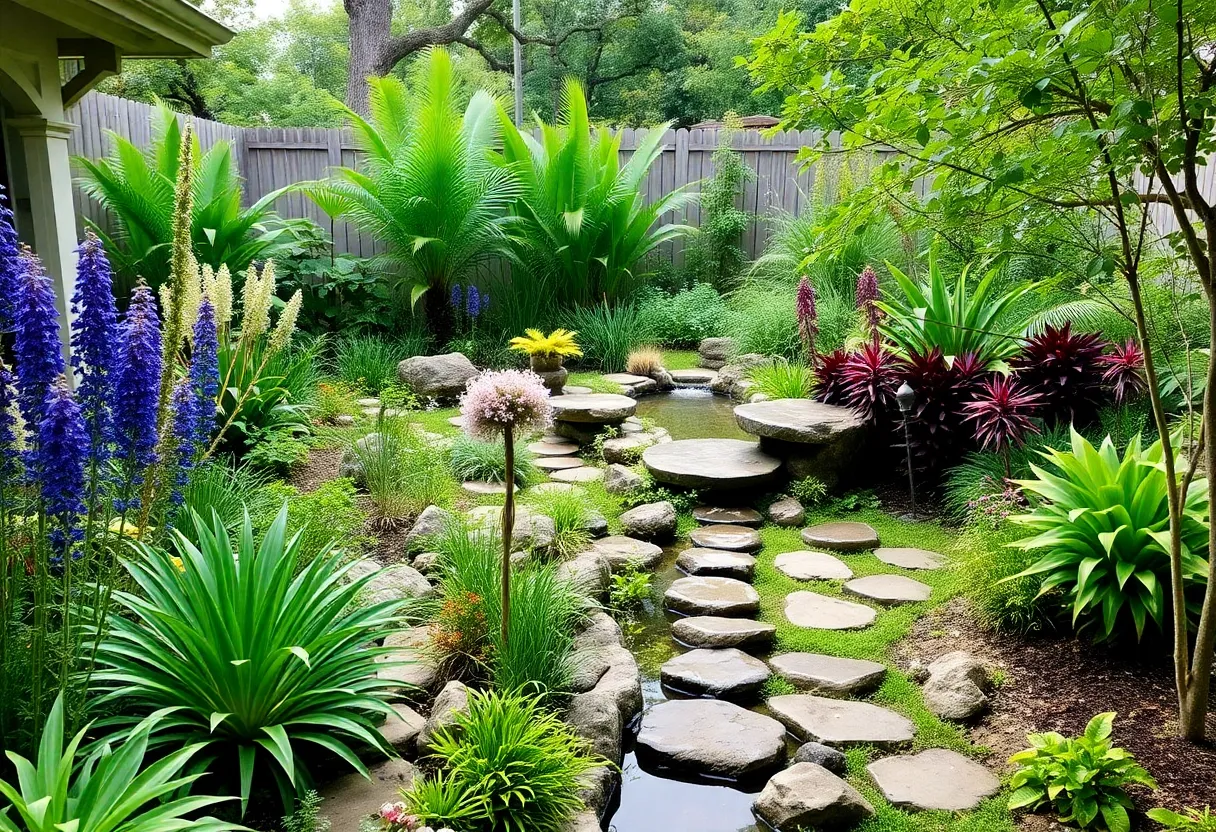
Integrate ponds, fountains, and birdbaths to enhance visual appeal and encourage wildlife, fostering a dynamic ecosystem.
Pathways and Circulation
Design meandering pathways with natural materials, such as flagstone, gravel, or decomposed granite. Paths provide access while contributing to the garden’s aesthetic charm.
Seating and Relaxation Areas
Place benches, hammocks, or gazebos in shaded areas to encourage lingering and outdoor enjoyment.
Lighting
Implement soft, atmospheric lighting along pathways and seating zones. This extends usability into evenings and highlights key features.
Incorporating Hardscaping Elements
Structural Features for Function and Beauty
Hardscape components lend structure and define space boundaries. Consider retaining walls, terraces, patios, and decks.
Retaining Walls and Terraces
Build low retaining walls to create elevated planting beds or define garden zones, especially on sloped sites. Terraced areas prevent erosion and improve accessibility.
Decks and Patios
Materials like natural stone or concrete pavers establish outdoor living areas, perfect for dining or lounging.
Sustainable Gardening Practices
Water Conservation and Soil Health
Houston’s climate necessitates water-wise strategies. Implement rain gardens to manage stormwater runoff, filtering water naturally while supporting native plantings.
Organic Amendments and Mulch
Use compost and organic matter to enrich soil fertility naturally. Apply mulch around plants to conserve moisture, suppress weeds, and maintain even soil temperature.
Native Plantual and Wildlife Support
Prioritize native plants for low water usage and vibrant local wildlife support. Incorporate food plants or nectar-rich species to attract pollinators and birds, fostering ecological balance.
Maintenance Strategies
Watering
Adopt deep, infrequent watering. Early morning watering reduces evaporation and keeps foliage dry, preventing disease.
Pruning and Deadheading
Remove dead or diseased branches regularly. Pruning promotes healthy growth and encourages flowering.
Mulching and Weed Control
Apply a 2-3 inch layer of mulch to improve soil moisture retention. Regularly monitor for weeds and remove them promptly to prevent competition for resources.
Pest and Disease Management
Use integrated pest management practices—manual removal, encouraging beneficial insects, and selecting resistant plant varieties—to keep pests in check naturally.
Conclusion
Developing a beautiful, sustainable garden sanctuary in Houston involves a mindful approach rooted in understanding local conditions.
Thoughtful planning, native plant selection, and strategic design elements combine to create a space that is both visually appealing and environmentally responsible. With patience and care, your backyard can become a year-round haven of tranquility, biodiversity, and personal fulfillment.
Frequently Asked Questions (FAQ)
What are the best native plants for Houston gardens?
Native plants such as Rock Rose, Gregg’s Mistflower, Liatris, Mealy Blue Sage, Turk’s Cap, and Velvet-leaf Mallow are well-adapted to Houston’s climate and soil. They attract pollinators and require less water and maintenance.
Native plants such as Rock Rose, Gregg’s Mistflower, Liatris, Mealy Blue Sage, Turk’s Cap, and Velvet-leaf Mallow are well-adapted to Houston’s climate and soil. They attract pollinators and require less water and maintenance.
How can I improve Houston’s clay soils for gardening?
Incorporate organic compost, sand, and other soil amendments to enhance fertility and drainage. Building raised beds is an effective way to control soil conditions and promote better root growth.
Incorporate organic compost, sand, and other soil amendments to enhance fertility and drainage. Building raised beds is an effective way to control soil conditions and promote better root growth.
What sustainable practices should I adopt for my Houston garden?
Implement rain gardens, composting organic waste, prioritizing native plants, and using mulches to conserve water and enrich soil health. These practices support local ecosystems and reduce resource consumption.
Implement rain gardens, composting organic waste, prioritizing native plants, and using mulches to conserve water and enrich soil health. These practices support local ecosystems and reduce resource consumption.
What design elements can enhance my garden’s tranquility?
Adding water features, pathways, secluded seating areas, and soft lighting creates a peaceful atmosphere conducive to relaxation and enjoyment.
Adding water features, pathways, secluded seating areas, and soft lighting creates a peaceful atmosphere conducive to relaxation and enjoyment.
Key Features of a Houston Garden Sanctuary
| Feature | Description | Benefits |
|---|---|---|
| Native Plant Selection | Plants adapted to Houston’s climate and soil. | Low maintenance, drought-tolerant, supports local wildlife |
| Soil Improvement | Amending clay soils with organic matter and building raised beds. | Enhanced drainage, fertility, and plant health |
| Water Features | Ponds, fountains, birdbaths. | Wildlife attraction, visual tranquility |
| Hardscaping | Retaining walls, pathways, patios. | Structure, accessibility, visual interest |
| Sustainable Practices | Rain gardens, composting, native plants. | Resource conservation, ecological support |

Author: STAFF HERE HOUSTON TX WRITER
The HOUSTON STAFF WRITER represents the experienced team at HEREHouston.com, your go-to source for actionable local news and information in Houston, Harris County, and beyond. Specializing in "news you can use," we cover essential topics like product reviews for personal and business needs, local business directories, politics, real estate trends, neighborhood insights, and state news affecting the area—with deep expertise drawn from years of dedicated reporting and strong community input, including local press releases and business updates. We deliver top reporting on high-value events such as Houston Livestock Show and Rodeo, Art Car Parade, and Chevron Houston Marathon. Our coverage extends to key organizations like the Greater Houston Partnership and Houston Area Urban League, plus leading businesses in energy and healthcare that power the local economy such as ExxonMobil, Schlumberger, and Houston Methodist. As part of the broader HERE network, including HEREAustinTX.com, HERECollegeStation.com, HEREDallas.com, and HERESanAntonio.com, we provide comprehensive, credible insights into Texas's dynamic landscape.