

Houston, TX, February 11, 2026
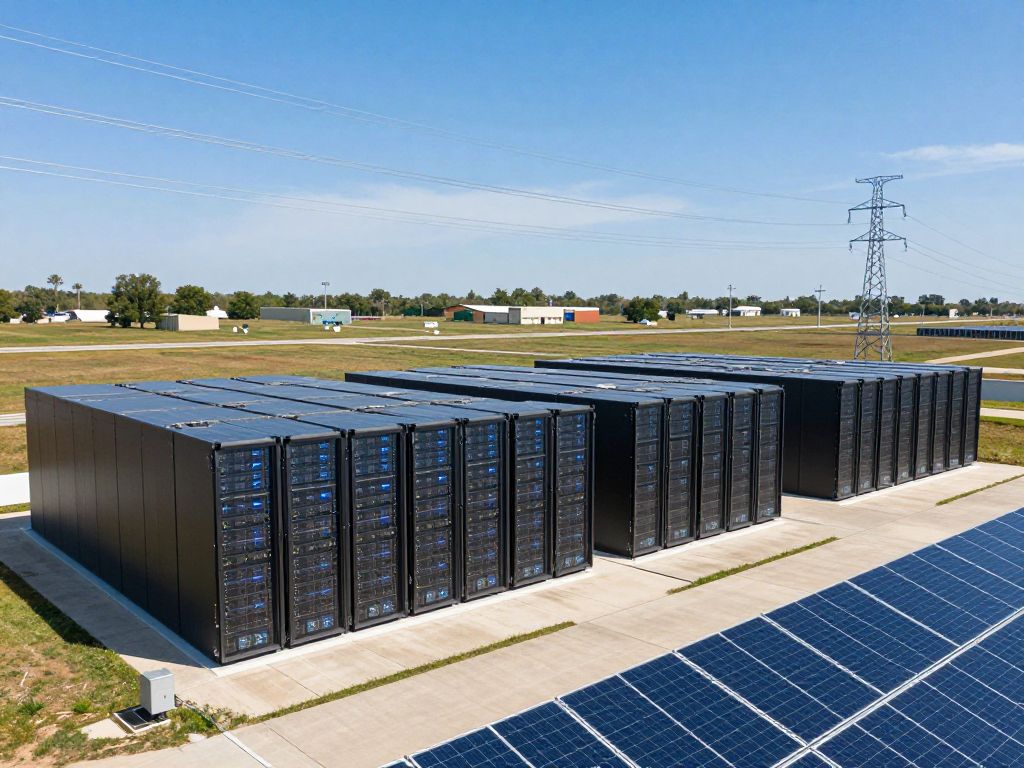
In response to unprecedented demand from data centers and energy-heavy industries, ERCOT is implementing a new Batch Study process to streamline grid integration. This reform aims to enhance efficiency, grow innovation, and maintain reliability in Texas’s evolving power landscape. With a significant increase in interconnection requests, ERCOT’s proactive measures are vital for supporting Texas’s economic growth while addressing infrastructure challenges.
Houston, TX
Texas Grid Adapts: ERCOT Reforms Large Load Connections for Growth
Facing an unprecedented surge in demand from data centers and other energy-intensive industries, ERCOT is implementing a new “Batch Study process” to streamline grid integration, foster innovation, and ensure reliability across the state.
Houston, TX is at the heart of Texas’s dynamic economic landscape, where entrepreneurial spirit and technological innovation are driving significant growth. The state’s robust business environment has attracted a “rapid explosion” of large energy consumers, particularly data centers, looking to establish or expand operations. This surge presents both immense economic opportunities and critical infrastructure challenges for the Electric Reliability Council of Texas (ERCOT), the state’s grid operator. ERCOT is proactively responding by updating its planning processes to ensure reliable power delivery for this evolving industrial demand, minimizing red tape while safeguarding grid stability.
The Digital Gold Rush: Data Centers Fueling Texas Growth
The expansion of digital infrastructure is transforming the Texas TX entrepreneurs landscape. Data centers, which are essential for artificial intelligence (AI), cloud computing, and e-commerce, are choosing Texas for its business-friendly policies and competitive energy market. These facilities represent substantial capital investments, create high-quality jobs, and generate significant local tax revenue, supporting vital community services. In 2021 alone, the data center industry added more than 49,000 direct jobs across Texas. The state’s deregulated energy market and abundant resources, including wind and natural gas, provide attractive conditions for these energy-intensive operations. Texas has no corporate or individual income tax, which is a significant financial advantage. Furthermore, Texas leads the nation in wind energy generation.
Unprecedented Demand and Grid Challenges
ERCOT has seen an “unprecedented” wave of large load interconnection requests. The queue for large load interconnections grew from 63 GW at the end of 2024 to more than 225 gigawatts by January 2026. This represents a 269% increase. Data centers account for approximately 77% of this queued capacity. For context, ERCOT’s peak demand record was 85.5 gigawatts in August 2023. This rapid growth significantly exceeds traditional transmission planning capabilities, which were designed for more predictable, dispersed load growth. The existing “one-off” study process for individual projects has led to repeated restudies, prolonged timelines, and uncertainty for developers as assumptions quickly become outdated when neighboring projects advance.
Concerns include potential demand-supply mismatches, insufficient energy reserve margins, and transmission congestion. There are also concerns about the reliability impact from voltage-sensitive loads that might immediately reduce consumption or disconnect during moderate voltage disturbances, posing risks to system stability. The opacity of data center operations, site planning, and energy efficiency also complicates energy estimations and projections.
ERCOT’s Proactive Response: The Batch Study Process
To address these challenges, ERCOT, in collaboration with the Public Utility Commission of Texas (PUCT) and stakeholders, is developing a new “Batch Study process.” This new framework aims to group multiple large load requests that meet certain stringent requirements into a single study. This approach is designed to improve study efficiency, consistency, and transparency, and to provide greater certainty for Large Load Customers. The goal is to allocate existing and planned transmission capacity more effectively and reduce the need for repeated restudies. Planning Guide Revision Request (PGRR) 115, implemented in December 2025, introduced time limits to ERCOT’s review of Transmission Service Provider (TSP) interconnection studies and allows large load projects to be included in other customers’ studies. However, ERCOT leaders have stated that even these changes are already insufficient to manage the increasing volume of large loads, indicating that additional changes are needed. ERCOT is also considering a “Transitional Batch Zero process” to provide a comprehensive transmission evaluation for large load interconnection requests already in the queue, bridging the gap before the full Batch Study rules are finalized. This interim step aims to address the uncertainty faced by developers with existing interconnection requests.
Senate Bill 6 and Regulatory Framework
The Texas State-level legislative framework is adapting to this rapid industrial growth. Enacted in June 2025, Senate Bill 6 (SB6) formalized ERCOT’s Large Load Interconnection Study (LLIS) process. SB6 directs the Public Utility Commission of Texas (PUCT) to establish rules for determining a “reasonable share” of upgrade costs for new large loads and requires improved disclosure to reduce speculative filings. The PUCT has initiated five parallel proceedings to implement SB6, addressing net-metering arrangements, large-load forecasting, interconnection standards, reliability and demand reductions, and transmission cost allocation. These regulatory updates aim to strike a balance between fostering economic development and protecting existing ratepayers from disproportionate costs. Finalization of these rules in 2026 is expected to provide additional certainty for large loads interconnecting in ERCOT.
Investing in Texas’s Energy Future
The growth of large loads highlights the critical need for significant capital investment in energy generation and grid infrastructure across the state. Data centers, with their long-term, consistent demand, can provide a dependable revenue base that encourages utilities and local governments to accelerate necessary upgrades to electric substations, water systems, and transmission corridors, much of which was built decades ago. An analysis found that states with growing large-load demand have often seen more stable electricity prices, partly because major users like data center operators help spread the fixed costs of maintaining an aging grid. Increasingly, operators are exploring “bring-your-own-power” strategies, pairing new facilities with dedicated generation or battery storage, which adds new capacity to the system rather than drawing from existing resources. For example, Google’s plan to invest $40 billion into new data centers in Texas includes funding for solar and battery storage.
The surge in demand is also driving a substantial increase in gas-fired power generation projects in Texas. About half of the gas-generation projects being developed in Texas, with a total capacity of 40 gigawatts, will operate off the state’s power grid and provide energy directly at data center sites. This Nationwide, the amount of gas-fired power generation in development in the U.S. nearly tripled over the past year to a record-high 252 gigawatts, with a third of the planned additions in Texas. This proactive investment and innovative approaches by Houston TX business leaders and energy providers are crucial for sustaining Texas TX entrepreneurs‘ growth and ensuring the state’s long-term energy resilience.
The rapid expansion of data centers and other large loads is a testament to Texas’s vibrant economy and commitment to technological leadership. ERCOT’s efforts to modernize its interconnection processes, supported by prudent regulatory adjustments, demonstrate a responsive approach to unprecedented growth. This adaptive strategy ensures that the state can continue to attract significant private investment and foster innovation, strengthening the overall Houston small business and broader state economy. Readers are encouraged to stay informed about these critical developments shaping Houston’s economic future and to support policies that balance robust economic growth with reliable infrastructure investment.
Frequently Asked Questions about ERCOT’s Large Load Planning Updates
What is ERCOT updating in its planning process?
ERCOT is updating its planning process for connecting large electrical loads, such as data centers, to the Texas power grid, moving towards a new “Batch Study process.”
Why is ERCOT updating its planning process?
ERCOT is updating its process due to an “unprecedented” and “rapid explosion” of large load interconnection requests, primarily driven by data centers. The current “one-off” study process is struggling with repeated restudies, uncertainty, and slow timelines.
What is the “Batch Study process”?
The “Batch Study process” is a new framework designed by ERCOT to group multiple large load requests that meet certain stringent requirements into a single study. This aims to improve efficiency, consistency, transparency, and certainty while maintaining grid reliability.
How much has the demand for large load interconnections grown in Texas?
The queue for large load interconnections in the ERCOT region grew from 63 GW at the end of 2024 to more than 225 gigawatts by January 2026. This represents a 269% increase.
What percentage of large load interconnection requests are from data centers?
Data centers account for approximately 77% of the large load capacity in the ERCOT interconnection queue.
What is the role of Senate Bill 6 (SB6) in these updates?
Texas State-level Senate Bill 6 (SB6), enacted in June 2025, formalized ERCOT’s Large Load Interconnection Study (LLIS) process. It directs the Public Utility Commission of Texas (PUCT) to determine a “reasonable share” of upgrade costs for new large loads and requires improved disclosure from developers.
What are the economic benefits of data centers for Texas?
Data centers create high-quality jobs, stimulate capital investment, and generate significant local tax revenue that supports essential services. In 2021 alone, the data center industry added more than 49,000 direct jobs across Texas.
Key Features of ERCOT’s Large Load Interconnection Updates
| Feature | Description | Scope |
|---|---|---|
| Growth in Large Load Requests | Queue grew from 63 GW at the end of 2024 to more than 225 GW by January 2026. | State-level (ERCOT region) |
| Dominant Load Type | Data centers constitute approximately 77% of the large load interconnection queue. | State-level (ERCOT queue) |
| New Interconnection Process | ERCOT is implementing a “Batch Study process” to group large loads into single studies for efficiency and certainty. | State-level (ERCOT) |
| Legislative Support | Texas State-level Senate Bill 6 (SB6), enacted in June 2025, formalized the large load interconnection study process and directs PUCT on cost-sharing and disclosure. | State-level (Texas) |
| Economic Impact of Data Centers | These facilities drive job creation, capital investment, and local tax revenue. In 2021, the industry added over 49,000 direct jobs across Texas. | State-level (Texas) |
| Energy Supply Strategy | About 40 gigawatts of planned gas-fired power generation in Texas are dedicated to data centers, with some operating off-grid. | State-level (Texas) |
| National Context of Data Center Demand | Nationwide data center electricity demand has tripled over the past decade and is projected to double or triple again by 2028. The U.S. electric grid will need to support 100 GW additional peak load by 2030, half due to data center growth alone. | Nationwide |
Deeper Dive: News & Info About This Topic
HERE Resources
Houston Prepares for AI-Driven Energy Demands
Governor Abbott Announces $370 Million Loan for Houston Power Plant
Baytown, Texas Welcomes Major Energy Boost
Texas Faces Billions in Clean Energy Cancellations Amid Nationwide Trend
Texas Faces Clean Energy Investment Setbacks Amid Challenges
Challenges Mount for Texas Energy Fund as Natural Gas Development Stalls
Future of Texas Energy Takes Center Stage at Summit
Houston Faces Historic Electricity Demand Amid Data Center Boom
Houston to Welcome New Power Plant: A Bright Future Ahead
Houston’s Tech Employment Continues to Grow

Author: STAFF HERE HOUSTON TX WRITER
The HOUSTON STAFF WRITER represents the experienced team at HEREHouston.com, your go-to source for actionable local news and information in Houston, Harris County, and beyond. Specializing in "news you can use," we cover essential topics like product reviews for personal and business needs, local business directories, politics, real estate trends, neighborhood insights, and state news affecting the area—with deep expertise drawn from years of dedicated reporting and strong community input, including local press releases and business updates. We deliver top reporting on high-value events such as Houston Livestock Show and Rodeo, Art Car Parade, and Chevron Houston Marathon. Our coverage extends to key organizations like the Greater Houston Partnership and Houston Area Urban League, plus leading businesses in energy and healthcare that power the local economy such as ExxonMobil, Schlumberger, and Houston Methodist. As part of the broader HERE network, including HEREAustinTX.com, HERECollegeStation.com, HEREDallas.com, and HERESanAntonio.com, we provide comprehensive, credible insights into Texas's dynamic landscape.