

News Summary
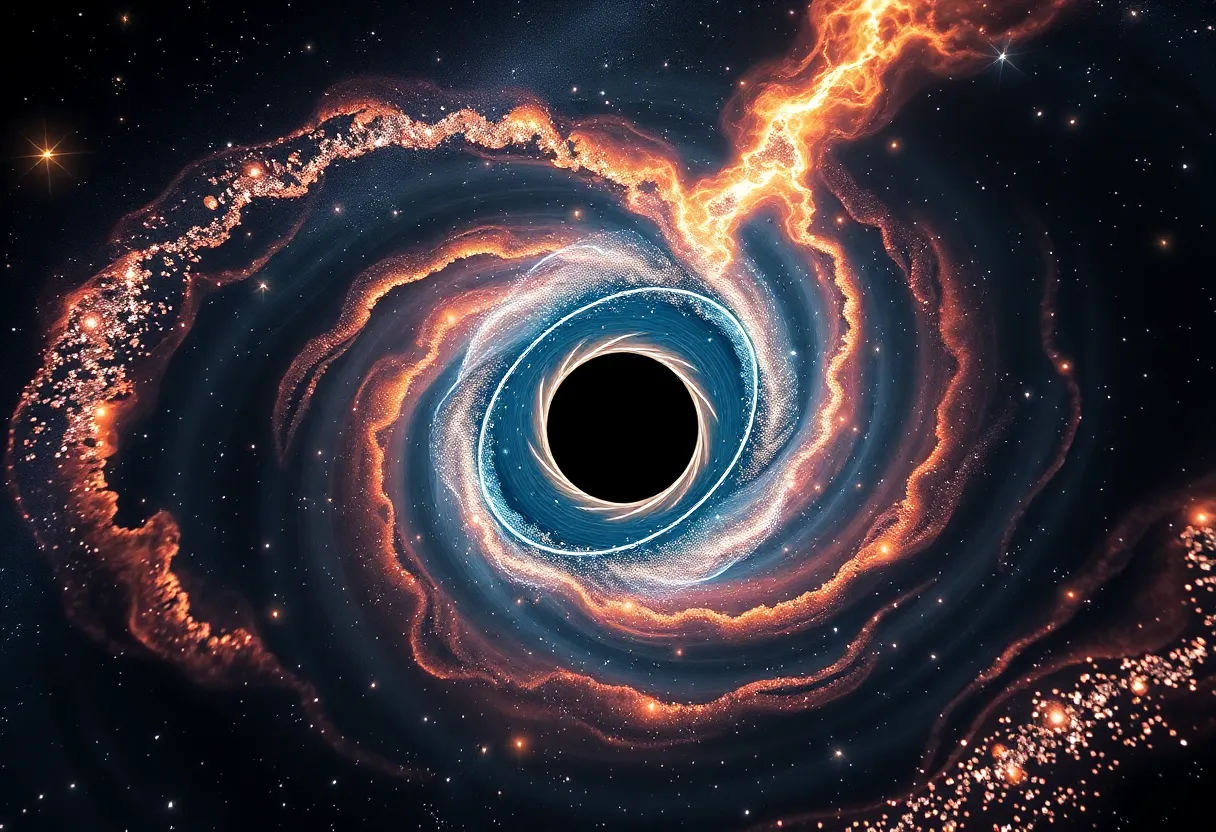
Astronomy students at the University of Texas have uncovered an unexpected black hole in Segue 1, changing previous assumptions about dwarf galaxies. The research indicates that this black hole, with a mass of 450,000 times that of the Sun, challenges the existing beliefs regarding the role of supermassive black holes in galaxy formation and evolution, suggesting they may be integral to maintaining the structural integrity of dwarf galaxies.
Houston, TX – A significant discovery by astronomy students at the University of Texas (UT) has revealed an unexpected black hole in the nearby galaxy Segue 1, prompting a reevaluation of prior assumptions about dwarf galaxies and their formation. The findings shed light on the cosmic architecture and may alter prevailing thoughts about the influence of supermassive black holes in galactic structures.
As part of a collaborative research course between UT Austin and the University of Texas at San Antonio (UTSA), students undertook advanced computational modeling to investigate celestial movements within Segue 1. Their exploration utilized cutting-edge supercomputers atUT Austin’s Texas Advanced Computing Center, leading to the astonishing conclusion that stars in close proximity to the galaxy’s center orbit in tightly bound patterns, a clear indicator of a black hole presence.
This exciting finding, estimated to represent 450,000 times the mass of the Sun, exceeds the combined mass of all visible stars in Segue 1. It supports the notion that these supermassive entities could play a more crucial role than previously thought, challenging the long-held belief that dark matter halos are the primary means of structural integrity in dwarf galaxies.
Innovative Research Methodology
The research employed advanced simulation techniques to model Segue 1’s stellar movements. By leveraging supercomputing resources, the students analyzed vast datasets, allowing them to observe rapid stellar orbits that indicated a black hole’s gravitational influence. This hands-on experience afforded scholars the opportunity to engage in practical applications of computational astrophysics, reinforcing their academic and professional development.
Implications for Galaxy Formation
The discovery signifies a shift in the understanding of how dwarf galaxies maintain gravitational cohesion. The research suggests that supermassive black holes may be integral in galaxy formation and evolution, contributing to the current discourse on the interplay between observable matter and dark matter. This insight opens new avenues for investigation into the nature of galaxy dynamics, potentially reshaping how future studies approach the structure and behavior of similar celestial bodies.
Collaboration and Academic Growth
This research initiative resulted from synergetic efforts between UT Austin and UTSA, fostering a collaborative educational environment that prepares students for future challenges in astrophysics and beyond. The project emphasizes the importance of interdisciplinary teamwork and the sharing of resources, enhancing the academic landscape within Texas’ higher education system.
Publication and Future Prospects
Following completion, the findings have been submitted for publication in the Astrophysical Journal Letters, contributing to ongoing research in the astrophysical community. The expectation of peer review and potential dissemination of knowledge points to significant implications for other academic institutions as well as industry leaders interested in cosmic phenomena.
Key Features of the Discovery
| Feature | Details |
|---|---|
| Discovery | Unexpected black hole in Segue 1 galaxy |
| Black Hole Mass | 450,000 times the mass of the Sun |
| Methodology | Computational models of stellar movements using supercomputers |
| Implications | Challenges previous beliefs about dwarf galaxy structure |
| Research Collaboration | UT Austin and UT San Antonio |
| Publication Status | Submitted to the Astrophysical Journal Letters |
In summary, the discovery of a black hole in Segue 1 by University of Texas students signifies not only an academic triumph but also a potential shift in understanding galactic formation. As research evolves, the importance of collaboration and innovation in higher education remains paramount. The implications of this study extend beyond academic walls, highlighting the necessity of equipping future leaders with the skills to explore and unravel the mysteries of our universe.
Readers are encouraged to stay informed about advancements coming from local universities and to participate in campus events that showcase such pioneering research. Exploring the dynamic landscape of Houston’s higher education community offers a window into the future of science and technology.
Frequently Asked Questions (FAQ)
What did the University of Texas astronomy students discover?
The students discovered an unexpected black hole in the nearby galaxy Segue 1, estimated to be 450,000 times the mass of the Sun.
How did they make this discovery?
They used supercomputers at UT Austin’s Texas Advanced Computing Center to create models of Segue 1’s stellar movements, revealing rapid, tight orbits indicative of a black hole.
What does this discovery imply about dwarf galaxies?
This suggests that supermassive black holes may play a more significant role in the structure of dwarf galaxies than previously thought, challenging the belief that dark matter halos are solely responsible for their cohesion.
What is the significance of this research?
The research provides new insights into galaxy formation and evolution, particularly concerning the role of supermassive black holes in dwarf galaxies.
Deeper Dive: News & Info About This Topic
HERE Resources
UT Austin and UTSA Students Discover Massive Black Hole
Texas Stock Exchange Set to Transform the Market
Texas Tech Women’s Soccer Battles Houston to Draw
Houston Cougars Women’s Soccer Team Draws with Texas Tech
Conexion Legal Tech Empowers Latino Community in Legal Tech
Houston Halts $30 Million Golf Course Renovation for Community Input
Renovation of Hermann Park Golf Course Paused Amid Community Concerns
Nuria Iturrioz Triumphs at the Aramco Houston Championship
University of Houston Men’s Golf Team Shines at Tournament
Challenges Mount for Texas Energy Fund as Natural Gas Development Stalls

Author: STAFF HERE HOUSTON TX WRITER
The HOUSTON STAFF WRITER represents the experienced team at HEREHouston.com, your go-to source for actionable local news and information in Houston, Harris County, and beyond. Specializing in "news you can use," we cover essential topics like product reviews for personal and business needs, local business directories, politics, real estate trends, neighborhood insights, and state news affecting the area—with deep expertise drawn from years of dedicated reporting and strong community input, including local press releases and business updates. We deliver top reporting on high-value events such as Houston Livestock Show and Rodeo, Art Car Parade, and Chevron Houston Marathon. Our coverage extends to key organizations like the Greater Houston Partnership and Houston Area Urban League, plus leading businesses in energy and healthcare that power the local economy such as ExxonMobil, Schlumberger, and Houston Methodist. As part of the broader HERE network, including HEREAustinTX.com, HERECollegeStation.com, HEREDallas.com, and HERESanAntonio.com, we provide comprehensive, credible insights into Texas's dynamic landscape.