
How to Choose the Best Trees for Your Houston Yard to Thrive in Heat
Introduction
Houston’s climate presents distinct challenges for landscaping and tree selection. Characterized by hot, humid summers and mild winters, the region demands trees that can withstand persistent high temperatures and elevated humidity levels. Properly choosing heat-tolerant and drought-resistant trees ensures longevity, aesthetic appeal, and environmental benefits. This guide emphasizes the criteria for selecting suitable species and highlights the top options tailored to Houston’s climate.
Key Considerations for Tree Selection
When planning your Houston landscape, focus on essential factors to maximize tree health and landscape performance:
- Heat Tolerance: Prioritize species that thrive in elevated temperatures without stress or decline.
- Drought Resistance: Especially in Texas, drought-resistant trees reduce water dependency after establishment.
- Soil Adaptability: Houston’s predominantly clay and loamy soils demand adaptable species capable of thriving without heavy soil amendments.
- Maintenance Requirements: Select low-maintenance trees to minimize pruning, disease control, and watering in the long term.
Top Heat-Tolerant Trees for Houston Yards
1. Live Oak (Quercus virginiana)
The Live Oak is an iconic native evergreen tree known for its extensive canopy and exceptional drought resistance. It provides dense shade that moderates yard temperatures effectively. Its durability makes it a cornerstone species for Houston landscapes.
- Mature Height: 40–80 feet
- Spread: 60–100 feet
- Maintenance: Low; occasional pruning recommended to maintain shape
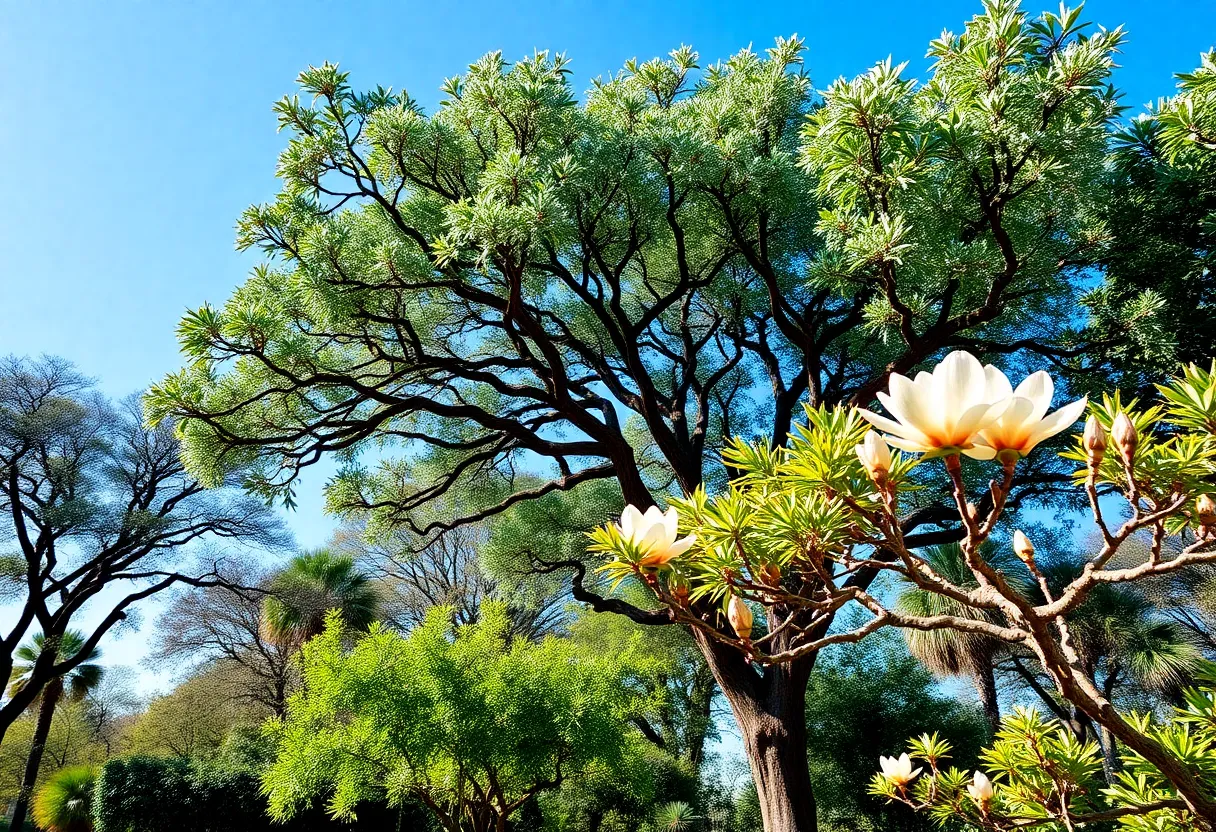
2. Southern Magnolia (Magnolia grandiflora)
This evergreen features large, fragrant white flowers and glossy foliage. It withstands Houston’s humidity and heat, offering aesthetic appeal alongside environmental resilience.
- Mature Height: 60–80 feet
- Spread: 40–50 feet
- Maintenance: Moderate; requires well-drained soil and periodic pruning
3. Cedar Elm (Ulmus crassifolia)
The Cedar Elm is a durable, deciduous tree tolerant of drought and high temperatures. It adapts to various soil conditions, making it suitable for less-than-ideal landscaping sites.
- Mature Height: 50–70 feet
- Spread: 40–60 feet
- Maintenance: Low; minimal pruning needed for healthy growth
4. Shumard Oak (Quercus shumardii)
The Shumard Oak offers rapid growth, a broad canopy, and impressive fall foliage. It provides substantial summer shade and withstands Houston’s climatic conditions.
- Mature Height: 60–80 feet
- Spread: 40–60 feet
- Maintenance: Low; pruning mainly for aesthetic shape or removing deadwood
5. Mexican Plum (Prunus mexicana)
This small deciduous tree produces fragrant spring blossoms and edible fruit. It thrives in heat and adds seasonal visual interest within the landscape.
- Mature Height: 15–25 feet
- Spread: 15–20 feet
- Maintenance: Low; prune after flowering to maintain shape
6. Chinquapin Oak (Quercus muehlenbergii)
Recognized for drought tolerance and strong structural form, the Chinquapin Oak has an attractive leaf color transition in fall, providing both shade and seasonal interest.
- Mature Height: 50–70 feet
- Spread: 40–60 feet
- Maintenance: Low; minimal pruning essential for health
7. Pecan (Carya illinoinensis)
The Pecan stands out for producing edible nuts and offering extensive shade. It is well-suited for Houston’s warm climate and diverse soil types.
- Mature Height: 70–100 feet
- Spread: 40–75 feet
- Maintenance: Moderate; requires well-drained soil and adequate watering
8. Desert Willow (Chilopsis linearis)
This small, deciduous tree is distinguished by its trumpet-shaped flowers that attract hummingbirds, plus its exceptional drought resistance, making it ideal for xeriscaping.
- Mature Height: 15–25 feet
- Spread: 15–20 feet
- Maintenance: Low; prune lightly for shape
9. Lacebark Elm (Ulmus parvifolia)
The Lacebark Elm is valued for striking exfoliating bark and graceful, arching branches. It tolerates heat and pests, maintaining its aesthetic with minimal care.
- Mature Height: 40–50 feet
- Spread: 30–40 feet
- Maintenance: Low; minimal pruning required
10. Chinese Pistache (Pistacia chinensis)
The Chinese Pistache is notable for its vibrant fall coloration and drought tolerance. It provides moderate to full shade and adapts readily to Houston’s climate.
- Mature Height: 25–35 feet
- Spread: 25–35 feet
- Maintenance: Low; occasional pruning to shape
Planting and Care Tips
Proper planting time is early spring or fall, when temperatures are moderate, reducing transplant shock. Deep watering is critical during the first few years to encourage robust root development. Apply mulch generously around the base to conserve moisture, suppress weeds, and shield roots from temperature extremes. Prune during dormancy to promote healthy growth, remove deadwood, and maintain desired shape. Regular inspections for pests or diseases ensure continued vitality.
Conclusion
Effective landscaping in Houston hinges on choosing species capable of thriving in intense heat and humidity. Focusing on heat tolerance, drought resistance, and soil adaptability guarantees a resilient and sustainable landscape. The trees listed above exemplify the best options to achieve shade, beauty, and environmental benefits in the Houston climate. Proper selection, planting, and maintenance will ensure your yard remains vibrant and healthy for years to come.
Frequently Asked Questions
1. What are the most durable trees for Houston’s heat?
Among the top options are Live Oak, Cedar Elm, and Shumard Oak, known for their resilience and low maintenance needs in high temperatures.
2. How do I ensure my new trees survive Houston’s summers?
Deep watering during the first few years, strategic mulching, and proper pruning during dormancy are essential to support healthy growth in Houston’s climate.
3. Which trees require the least maintenance?
Most durable options such as Live Oak, Lacebark Elm, and Desert Willow require minimal pruning and are pest-resistant, offering low-maintenance landscape solutions.
4. When is the best time to plant trees in Houston?
Early spring or fall are ideal planting seasons, as temperatures are moderate, reducing transplant stress and promoting establishment.
5. Can smaller trees be suitable for shaded yards in Houston?
Yes. Trees like Mexican Plum and Chinese Pistache are suitable for smaller spaces and provide seasonal color and interest.
Key Features of Tree Selection for Houston
| Feature | Description |
|---|---|
| Temperature Tolerance | Species must withstand prolonged high heat with minimal stress. |
| Drought Resistance | Requires minimal supplemental watering once established, crucial for conservation and cost-effective landscaping. |
| Soil Compatibility | Adaptability to Houston’s prevalent clay and loamy soils minimizes soil amendments and promotes healthy roots. |
| Maintenance Level | Low-maintenance trees reduce pruning, pest control, and watering demands, ensuring sustainable landscape care. |
| Size and Spread | Choosing appropriately sized trees ensures functionality without overcrowding, considering available space and shade needs. |
| Environmental Benefits | Shade, erosion control, and habitat support contribute to ecological sustainability in urban environments. |

Author: STAFF HERE HOUSTON TX WRITER
The HOUSTON STAFF WRITER represents the experienced team at HEREHouston.com, your go-to source for actionable local news and information in Houston, Harris County, and beyond. Specializing in "news you can use," we cover essential topics like product reviews for personal and business needs, local business directories, politics, real estate trends, neighborhood insights, and state news affecting the area—with deep expertise drawn from years of dedicated reporting and strong community input, including local press releases and business updates. We deliver top reporting on high-value events such as Houston Livestock Show and Rodeo, Art Car Parade, and Chevron Houston Marathon. Our coverage extends to key organizations like the Greater Houston Partnership and Houston Area Urban League, plus leading businesses in energy and healthcare that power the local economy such as ExxonMobil, Schlumberger, and Houston Methodist. As part of the broader HERE network, including HEREAustinTX.com, HERECollegeStation.com, HEREDallas.com, and HERESanAntonio.com, we provide comprehensive, credible insights into Texas's dynamic landscape.