
News Summary
Dr. Allan MacDonald, a physicist at UT Austin, has received the BBVA Foundation Frontiers of Knowledge Award for his groundbreaking work on quantum materials and the ‘magic angle’ in twisted bilayer graphene. This award recognizes his significant contributions to the field of physics and reflects the university’s commitment to academic excellence. The award not only celebrates his achievements but also highlights the potential applications of his research in superconductivity and quantum computing technologies.
Houston, TX — The University of Texas at Austin continues to solidify its position as a hub of scientific discovery and academic excellence, a fact underscored by the recent recognition of one of its distinguished faculty members. Dr. Allan MacDonald, a theoretical condensed matter physicist at the institution, has been honored with the prestigious BBVA Foundation Frontiers of Knowledge Award in Basic Sciences. This international accolade highlights his pioneering contributions to the understanding of quantum materials, particularly his theoretical work on the “magic angle” in twisted bilayer graphene.
This achievement not only celebrates Dr. MacDonald’s individual brilliance and years of dedicated research but also reflects the high caliber of academic rigor and innovative spirit fostered within Texas’s higher education landscape. Such fundamental breakthroughs are crucial for advancing knowledge, inspiring student growth, and ultimately driving institutional excellence with far-reaching community and economic impacts. The award reinforces the critical role that disciplined inquiry and academic freedom play in pushing the boundaries of scientific understanding.
Recognizing Pioneering Research: The Frontiers of Knowledge Award
The BBVA Foundation Frontiers of Knowledge Award is an international program established to recognize and reward excellence in research and cultural creation, with a particular emphasis on contributions that have achieved broad impact due to their originality and significance. Dr. Allan MacDonald, the Sid W. Richardson Foundation Regents Chair Professor of Physics at The University of Texas at Austin, received this esteemed award in the Basic Sciences category. He shares the honor with experimental physicist Pablo Jarillo-Herrero from the Massachusetts Institute of Technology (MIT). The award, announced on January 15, 2026, comes with a monetary prize of 400,000 euros, acknowledging the profound impact of their joint work.
The BBVA Foundation emphasizes the value of knowledge as a global public good and a vital tool for addressing contemporary challenges and expanding individual worldviews. This recognition for Dr. MacDonald marks him as the first University of Texas at Austin faculty member to win a Frontiers of Knowledge Award in the basic sciences category. The award committees are composed of internationally reputed experts who deliberate independently, relying on standards of excellence specific to their fields.
Unlocking New Material Properties with the “Magic Angle”
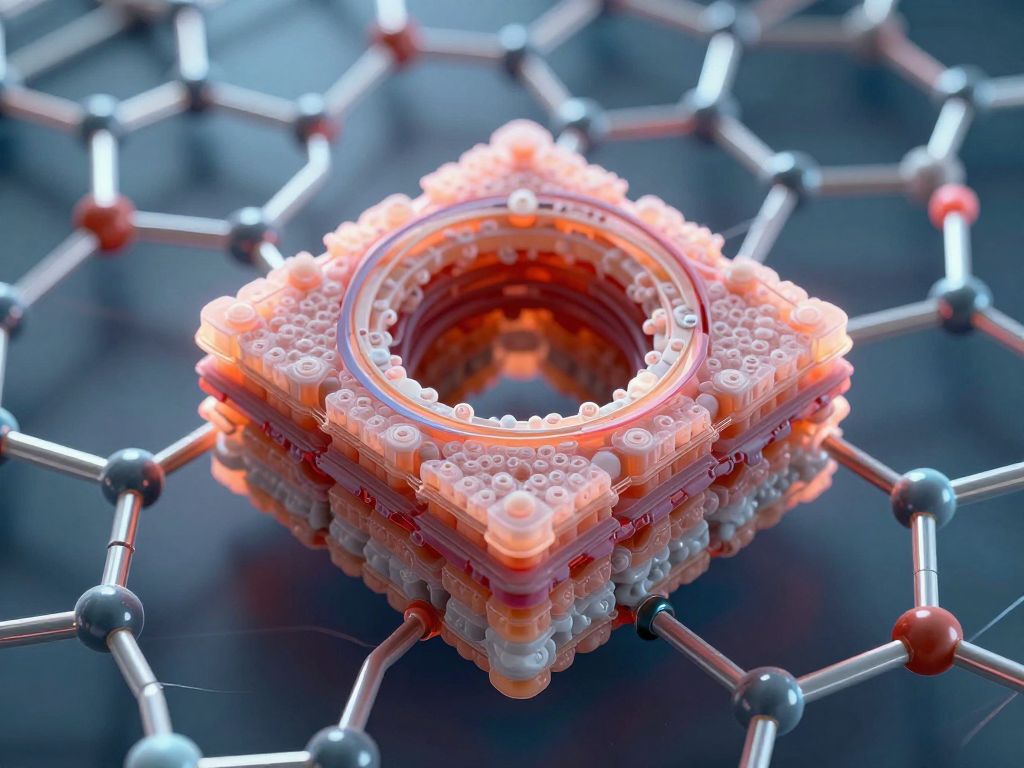
The core of the award-winning research centers on the discovery of a “magic angle” in twisted bilayer graphene. Graphene is a material composed of a single layer of carbon atoms. In 2011, Dr. MacDonald, along with his then-postdoctoral researcher Rafi Bistritzer, theoretically predicted that when two single-atom-thick layers of graphene are stacked and rotated at a very precise angle, approximately 1.1 degrees, the material would exhibit unexpected and extraordinary electronic properties. This specific rotation causes the electrons, which typically move at very high speeds in conventional materials, to slow down significantly.
This drastic reduction in electron speed leads to profound changes in graphene’s behavior, allowing for the induction of superconductivity, magnetism, and other novel properties. The theoretical prediction made by MacDonald and Bistritzer in 2011 was later experimentally confirmed in 2018 by Pablo Jarillo-Herrero and his team at MIT. This groundbreaking work has collectively launched a new and rapidly evolving field of physics known as twistronics, which investigates how rotating ultrathin layers of two-dimensional materials can modify and control their electronic properties.
Transformative Applications and Future Potential
The discovery of the “magic angle” and the subsequent development of twistronics hold significant promise for a wide range of high-impact applications. The ability to induce superconductivity—the phenomenon of transmitting electricity with virtually no energy loss—at higher temperatures than previously possible could revolutionize energy transmission. This research also paves the way for the development of advanced electronic devices and the future of quantum computing technologies.
Further potential applications include ultra-sensitive light detectors, particularly in the infrared spectrum, and new types of devices for converting information between computers and fiber-optic cables. One of the most remarkable aspects of this discovery is the potential to realize virtually every possible behavior of matter by rotating superimposed layers of two-dimensional materials at different angles. This means that properties previously requiring different elements from across the periodic table could now be accessed using a single element, carbon (graphene).
While the long-term industrial applications are still under development, and challenges remain in producing these materials on a large scale, the fundamental understanding gained from this research provides a robust foundation for future innovation. Such advancements are vital for creating more energy-efficient artificial intelligence and advancing neurological computing applications.
A Legacy of Excellence at The University of Texas at Austin
Dr. Allan MacDonald’s distinguished career at The University of Texas at Austin exemplifies the institution’s commitment to cutting-edge research and the cultivation of intellectual leadership. As the Sid W. Richardson Foundation Regents Chair Professor of Physics, he has authored over 1,000 physics publications, accumulating more than 110,000 citations, and has been granted three patents. His significant contributions to condensed matter physics have earned him multiple prestigious awards throughout his career.
Prior to the Frontiers of Knowledge Award, Dr. MacDonald was a co-recipient of the Wolf Prize in Physics in 2020 for his foundational work in twistronics. He also received the Herzberg Medal in 1987, the Oliver E. Buckley Prize of the American Physical Society in 2007, and the Ernst Mach Honorary Medal of the Czech Academy of Sciences in 2012. He was elected to the American Academy of Arts and Sciences in 2005 and the National Academy of Sciences in 2010.
The University of Texas at Austin’s Physics Department consistently ranks among the nation’s best. In 2025, it was ranked 13th for Physics in the United States and 19th in the World, based on its extensive research output and citations. The department is also recognized as the #1 physics program in Texas and among the Top 20 Physics Schools in the United States. Key research areas include quantum and particle physics, materials science, optical engineering, astrophysics and astronomy, and nanotechnology. This strong academic environment provides a fertile ground for breakthroughs like Dr. MacDonald’s, attracting top talent and fostering a culture of discovery.
Advancing Texas’s Scientific and Educational Ecosystem
The recognition of Dr. Allan MacDonald’s work through the BBVA Foundation Frontiers of Knowledge Award underscores the profound impact that institutions like The University of Texas at Austin have on the broader Texas higher education and scientific innovation landscape. Such achievements are a testament to the dedication to fundamental research that drives not only academic prestige but also tangible advancements beneficial to society. By investing in and celebrating intellectual pursuits, Texas universities contribute significantly to the state’s economic vitality, technological competitiveness, and the development of future leaders.
The spirit of independent inquiry and the pursuit of knowledge, exemplified by Dr. MacDonald’s career, serve as powerful motivators for students and researchers alike. These accomplishments demonstrate how sustained efforts in basic sciences can lead to unforeseen applications, reinforcing the importance of robust support for academic freedom and scientific exploration across all disciplines. The University of Texas at Austin is consistently ranked among the top public universities in the United States, including being recognized as a top public university overall and among the most innovative, further highlighting its role in advancing Texas’s scientific and educational ecosystem.
Summary of Award and Discovery
| Category | Detail |
|---|---|
| Award Name | BBVA Foundation Frontiers of Knowledge Award in Basic Sciences |
| Recipients | Allan MacDonald (The University of Texas at Austin) and Pablo Jarillo-Herrero (MIT) |
| Award Date | January 15, 2026 |
| Prize Money | 400,000 Euros (per category) |
| Key Discovery | “Magic Angle” in twisted bilayer graphene |
| Theoretical Prediction | 2011 by Allan MacDonald and Rafi Bistritzer |
| Experimental Confirmation | 2018 by Pablo Jarillo-Herrero |
| New Field Initiated | Twistronics |
| Potential Applications | Lossless electricity transmission, electronic devices, quantum computing, ultra-sensitive light detectors, energy-efficient AI |
Frequently Asked Questions
What award did Allan MacDonald win?
Allan MacDonald won the BBVA Foundation Frontiers of Knowledge Award in Basic Sciences.
Who shared the award with Allan MacDonald?
Pablo Jarillo-Herrero from the Massachusetts Institute of Technology (MIT) shared the BBVA Foundation Frontiers of Knowledge Award in Basic Sciences with Allan MacDonald.
What is the “magic angle” discovery?
The “magic angle” discovery refers to the theoretical prediction by Allan MacDonald in 2011 that when two single-atom-thick layers of graphene are twisted at a specific angle, approximately 1.1 degrees, electrons slow down significantly, leading to profound changes in graphene’s behavior and inducing properties like superconductivity and magnetism.
What is twistronics?
Twistronics is a new field of physics that investigates how rotating ultrathin layers of two-dimensional materials can modify and control their electronic properties, a field initiated by the work on the “magic angle” in twisted bilayer graphene.
What are the potential applications of the “magic angle” discovery?
The potential applications of the “magic angle” discovery include lossless electricity transmission, the development of new electronic devices, quantum computing technologies, ultra-sensitive light detectors, and more energy-efficient artificial intelligence.
What is Allan MacDonald’s role at The University of Texas at Austin?
Allan MacDonald is the Sid W. Richardson Foundation Regents Chair Professor of Physics at The University of Texas at Austin.
Deeper Dive: News & Info About This Topic
HERE Resources

Author: STAFF HERE HOUSTON TX WRITER
The HOUSTON STAFF WRITER represents the experienced team at HEREHouston.com, your go-to source for actionable local news and information in Houston, Harris County, and beyond. Specializing in "news you can use," we cover essential topics like product reviews for personal and business needs, local business directories, politics, real estate trends, neighborhood insights, and state news affecting the area—with deep expertise drawn from years of dedicated reporting and strong community input, including local press releases and business updates. We deliver top reporting on high-value events such as Houston Livestock Show and Rodeo, Art Car Parade, and Chevron Houston Marathon. Our coverage extends to key organizations like the Greater Houston Partnership and Houston Area Urban League, plus leading businesses in energy and healthcare that power the local economy such as ExxonMobil, Schlumberger, and Houston Methodist. As part of the broader HERE network, including HEREAustinTX.com, HERECollegeStation.com, HEREDallas.com, and HERESanAntonio.com, we provide comprehensive, credible insights into Texas's dynamic landscape.