

Hood County, February 11, 2026
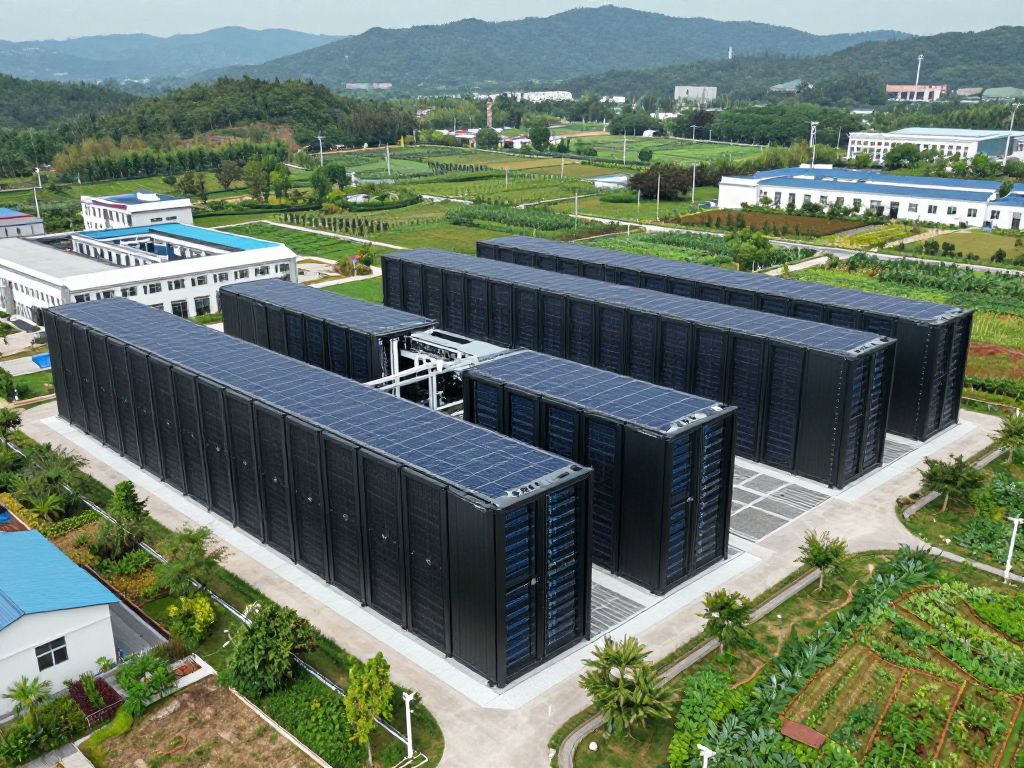
In a closely divided vote, Hood County commissioners opted against a six-month moratorium on new data center construction, signaling strong support for ongoing economic growth. The decision reflects a broader trend in Texas, where rapid technological advancements and the AI boom are driving demand for robust data infrastructure. While the vote is seen as fostering a business-friendly environment, it also raises community concerns about local resource management and environmental impacts. The ongoing discussions emphasize the delicate balance between progress and sustainable development in Texas.
Houston, TX — The evolving landscape of Texas’s economic growth continues to be a central topic for businesses and communities across the state. In a recent development highlighting the dynamic tension between rapid technological advancement and local resource management, Hood County commissioners made a significant decision regarding data center development. This decision reflects broader discussions shaping the future of industrial growth and entrepreneurial opportunity within Texas, a state known for fostering innovation and a business-friendly environment.
The choice by Hood County to reject a temporary moratorium on new data center construction underscores a commitment to maintaining an economic climate that encourages private investment and supports the expansion of crucial infrastructure. As the Artificial Intelligence (AI) boom accelerates, the demand for robust data infrastructure is escalating, presenting both opportunities for economic prosperity and challenges for local governance regarding resource allocation and community impact. This scenario offers valuable insights for Houston TX business leaders and Texas TX entrepreneurs observing statewide trends.
Hood County Upholds Pro-Growth Stance Amid Data Center Surge
In a closely watched 3-2 vote, Hood County commissioners rejected a proposed six-month moratorium on new industrial development, specifically including data centers. This decision came after extensive public testimony and amidst a broader statewide discussion about the authority of local governments to impose such development freezes. The county, situated approximately 40 miles southwest of Fort Worth, is already home to several proposed data centers, with additional projects anticipated.
The move by Hood County aligns with a prevailing sentiment in Texas that emphasizes fostering an environment conducive to business and innovation. State and national Republican leaders have shown strong backing for data center proposals, viewing them as integral to the AI boom and overall economic advancement. This approach seeks to attract significant private investment and leverage the technological wave to benefit local economies, creating jobs and expanding the tax base.
Navigating the Legal Landscape: State Authority vs. Local Control
A pivotal factor in Hood County’s decision was a letter from State Senator Paul Bettencourt (R-Houston), who chairs the Senate Committee on Local Government. Senator Bettencourt’s communication, addressed to the Texas Attorney General, asserted that counties lack the constitutional or statutory authority to impose development moratoriums. This intervention highlighted a critical aspect of limited regulation, emphasizing that local jurisdictions operate within frameworks established by state law, which generally restricts their power to halt development without explicit authorization.
The debate over local control versus state authority is a recurring theme in Texas’s rapid economic development. While communities often seek to manage growth, the state’s legislative framework tends to prioritize consistent, predictable regulatory environments to encourage large-scale investments. This principle is particularly relevant for high-capital projects like data centers, where developers need certainty to commit substantial resources. The commissioners who voted against the moratorium expressed concerns that a pause could deter prospective investors and encourage them to seek opportunities in other counties or states.
Balancing Economic Opportunity with Community Concerns
While the decision to reject the moratorium was driven by a desire to promote economic growth, it was also met with considerable community feedback. Residents voiced concerns about the potential strain on local resources, particularly the already challenged water supply, increased energy demand, air quality, noise pollution, and the aesthetic impact of large industrial facilities. There are also concerns about the degradation of property values. These concerns underscore the importance of thoughtful planning and dialogue as Texas communities experience unprecedented growth.
The discussion in Hood County reflects a statewide challenge. Texas does not currently have a comprehensive system for tracking water usage by the data center industry, making it difficult to assess the cumulative impact of these facilities on water resources. This highlights an area where improved data collection and transparent discussions could help bridge the gap between development goals and community needs, ensuring sustainable Texas economic growth.
The AI Boom and Data Center Investments
The surge in data center proposals across Texas is a direct consequence of the booming AI sector, which requires immense computing power and storage capabilities. These facilities represent significant private investment, often amounting to billions of dollars, and contribute to the local economy through job creation and property taxes. For many communities, attracting such investments is seen as a pathway to diversification and long-term economic stability.
The state of Texas actively promotes itself as a prime location for these high-tech developments, understanding their role in the national AI infrastructure. Companies are often drawn to Texas by business-friendly incentives, ample land, and a skilled workforce, contributing to the broader Houston small business and entrepreneurial ecosystem through indirect support services and related industries. This dynamic positions Texas as a leader in the digital economy, fostering an environment where innovation can thrive.
Conclusion: Forward Momentum for Texas’s Digital Future
The decision in Hood County to reject a moratorium on data center development reflects a commitment to a pro-growth economic philosophy that values entrepreneurial innovation and private investment. While addressing community concerns about resources remains vital, the commissioners’ vote signals a clear intent to support the expansion of the digital infrastructure necessary for the AI era.
For Houston TX business leaders and Texas TX entrepreneurs, this outcome reaffirms the state’s dedication to an environment of limited regulation and robust economic development. It encourages continued private sector engagement in building the foundational technologies that will drive future prosperity. We encourage our readers to stay informed and engaged in these important conversations shaping Texas’s economic landscape.
FAQ
- What was the decision made by Hood County commissioners?
- Hood County commissioners voted 3-2 against a proposed temporary pause on new industrial development, including data centers.
- What were some of the reasons for rejecting the moratorium?
- Commissioners who opposed the moratorium argued that a blanket pause on development could send a chilling signal to prospective investors and employers, potentially pushing projects, jobs, and tax revenue to other areas. A letter from State Senator Paul Bettencourt also stated that counties lack the constitutional or statutory authority to impose development moratoriums.
- What concerns did residents raise about data center development?
- Residents expressed concerns about the strain on the state’s already strained water supply, energy demand, air quality, noise, and the visual impact of massive server farms, as well as the potential degradation of property values.
- What is the state-level context regarding data centers in Texas?
- Texas is experiencing a wave of data center proposals driven by the AI boom, with strong backing from state and national Republican leaders. However, Texas does not holistically track water use by the data center industry.
- How does this decision relate to economic growth?
- The rejection of the moratorium aims to prevent deterring private investment and to maintain an economic climate that encourages job creation and tax revenue from data center developments.
Key Aspects of Hood County’s Data Center Moratorium Decision
| Aspect | Details | Scope |
|---|---|---|
| County Decision | Hood County commissioners rejected a temporary moratorium on data center development with a 3-2 vote. | Local |
| Reasons for Rejection | Concerns about deterring investors and losing jobs/tax revenue to other areas. State Senator’s letter citing lack of county authority for moratoriums. | State-level influence |
| Community Concerns | Water supply strain, increased energy demand, air quality, noise, visual impact, property value degradation. | Local |
| AI Boom Impact | Fueled by the AI boom, Texas faces a wave of data center proposals. | State-level |
| Regulatory Environment | Debate on county authority for development pauses; State Senator argues counties lack constitutional or statutory power. | State-level |
| Economic Benefits | Data centers bring jobs and tax revenue, supporting economic growth. | State-level |
| Water Usage Tracking | Texas does not holistically track water use by the data center industry. | State-level |
Deeper Dive: News & Info About This Topic
HERE Resources
Texas Grid Adapts: ERCOT Reforms Large Load Connections
Tom Marian Honored as Maritime Leader of the Year
Texas Examines Data Center Water Use Amidst Growth Boom
Texas Women’s Tennis Team Triumphs at ITA National Indoor Championships
Houston’s Economic Pulse: Global Trends Meet Local Innovation
Dr. Prabhas Moghe Becomes President of UT Dallas
Texas’ AI Boom Fuels Growth for Royal Signs & Awnings
How to Confidently Choose the Right Real Estate Agent for Your First Home in Houston
Community Spirit Shines in New Caney and Porter
Cabana Mariscos Expands to Beaumont, Boosting Local Economy

Author: STAFF HERE HOUSTON TX WRITER
The HOUSTON STAFF WRITER represents the experienced team at HEREHouston.com, your go-to source for actionable local news and information in Houston, Harris County, and beyond. Specializing in "news you can use," we cover essential topics like product reviews for personal and business needs, local business directories, politics, real estate trends, neighborhood insights, and state news affecting the area—with deep expertise drawn from years of dedicated reporting and strong community input, including local press releases and business updates. We deliver top reporting on high-value events such as Houston Livestock Show and Rodeo, Art Car Parade, and Chevron Houston Marathon. Our coverage extends to key organizations like the Greater Houston Partnership and Houston Area Urban League, plus leading businesses in energy and healthcare that power the local economy such as ExxonMobil, Schlumberger, and Houston Methodist. As part of the broader HERE network, including HEREAustinTX.com, HERECollegeStation.com, HEREDallas.com, and HERESanAntonio.com, we provide comprehensive, credible insights into Texas's dynamic landscape.