

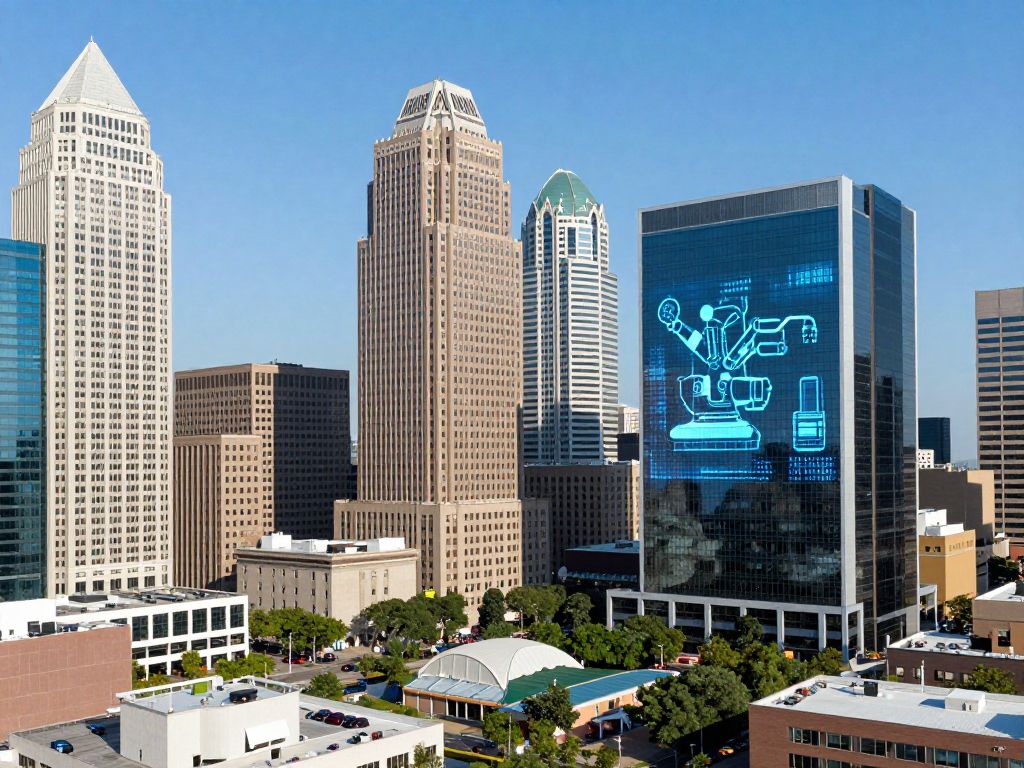
Houston, TX, January 30, 2026
Houston’s economy is evolving with Dow’s decision to cut 4,500 jobs as it focuses on automation and AI. This change reflects a broader trend impacting local industries. Despite these challenges, local businesses are embracing innovation and leveraging technology to enhance competitiveness, signaling resilience and opportunities for growth in the region.
Houston, TX
Houston Navigates Automation: Dow’s Shift and Local Economic Resilience
Houston’s economic landscape is dynamically evolving as global corporations embrace advanced technologies. A recent development involving Dow’s substantial workforce reduction, driven by a strategic shift towards artificial intelligence and automation, underscores a broader trend impacting industries both nationwide and locally. This transformation presents both challenges and significant opportunities for innovation and economic growth in the Houston area, highlighting the enduring resilience of its businesses and the entrepreneurial spirit that defines the region.
The chemical giant Dow announced plans to cut approximately 4,500 jobs globally, roughly 12.5% of its workforce, as part of a “Transform to Outperform” initiative focusing on artificial intelligence and automation. This move aims to simplify operations, streamline processes, and modernize its approach to achieve significant productivity gains and financial improvements by 2028. Dow anticipates incurring between $600 million and $800 million in severance costs related to these layoffs by the end of 2027. Dow has a significant presence in the greater Houston region, with facilities in Freeport, Bayport, Deer Park, La Porte, and Texas City, making this a relevant development for the local economy.
The Automation Wave and Houston’s Workforce
The shift towards AI and automation, as exemplified by Dow, is a nationwide trend with specific implications for the Houston workforce. Reports suggest that artificial intelligence could replace the equivalent of 300 million full-time jobs nationwide and expose two-thirds of jobs in the U.S. and Europe to some degree of AI automation. In Houston specifically, some estimates indicate that approximately 12 percent of the workforce, translating to around 381,910 jobs, could be at risk of automation by 2027. Middle-skill jobs in the Houston area, requiring more than a high school diploma but less than a four-year degree, face a higher risk of disruption from automation.
However, many Houston business leaders are not planning to reduce their workforces due to AI adoption, instead viewing it as a tool to boost efficiency and maintain competitiveness. Approximately 78% of Texas businesses either currently use AI or plan to introduce it within the next 12 months. This indicates a proactive approach to integrating new technologies without solely focusing on job displacement, aligning with the perspective that AI can create new job types and increase productivity, freeing individuals to focus on more creative tasks.
Fostering Entrepreneurial Innovation in the Bayou City
Houston has been actively cultivating a dynamic innovation and startup ecosystem, attracting significant venture capital funding and supporting over 80 startup development organizations. The city’s diverse economy, with strong sectors like energy, healthcare, and aerospace, provides fertile ground for startups to apply AI and automation. Energy companies are utilizing AI and the Internet of Things (IoT) to optimize operations, while healthcare institutions are investing in predictive analytics and connected medical devices. This demonstrates a robust local commitment to embedding innovation into the region’s economic DNA, rather than merely following trends.
Small businesses, the backbone of Houston’s economy, are increasingly leveraging AI to enhance marketing, customer support, recruiting, and operational efficiency. These tools allow entrepreneurs to save time, optimize budgets, and remain competitive, enabling them to focus on creativity, service, and strategic growth. The resilience of Houston’s small business community is evident, with many owners adapting to economic pressures by adopting new technologies, including AI, automation, and cybersecurity. A substantial 80% of small business owners nationwide plan to integrate AI-based tools by 2026.
The Role of Limited Regulation in Economic Growth
Texas’s regulatory environment, particularly the absence of traditional zoning ordinances in Houston, is often cited as a factor contributing to its economic growth and flexibility. This approach allows for a more market-based development, potentially saving developers time and money, and fostering a unique urban character. Studies suggest that economies with lighter regulatory burdens experience higher rates of innovation and entrepreneurial activity. Reducing bureaucratic hurdles and unnecessary red tape can allow businesses to thrive, leading to job creation, increased productivity, and expanded market opportunities. Furthermore, a streamlined regulatory framework can foster greater competition, enabling smaller firms and startups to enter the market and contribute to job creation.
State-level initiatives, such as the Texas Economic Development Act (Chapter 313), aim to attract large-scale capital investment by offsetting high property tax rates, further contributing to job creation and economic impact across the state. These policies underscore a commitment to creating an attractive business environment that encourages private investment and business expansion.
Workforce Development and Adaptation
As AI reshapes the workforce, the importance of continuous learning and skill development is paramount. The Greater Houston Partnership’s UpSkill Houston initiative is actively working to align talent supply with demand by connecting individuals to career pathways that drive economic mobility, particularly in high-growth sectors like energy, healthcare, advanced manufacturing, and construction. This includes the development of a generative AI-powered platform to simplify career navigation, connecting students and underemployed adults to education pathways, credentials, and job opportunities. The platform also provides employers with AI-driven candidate recommendations and real-time workforce insights.
Workers who can adapt to automation by gaining new education and skills are better positioned for the evolving job market. While AI may automate routine tasks, it also creates demand for specialized skills and knowledge, emphasizing the value of developing expertise in specific areas. The focus on “skills-first” talent practices by employers, moving beyond traditional degree requirements to emphasize competencies and demonstrated experience, can broaden access to opportunities for a wider talent pool.
Community Insights and Future Prospects
Houston’s resilience is also rooted in its strong community involvement and collaborative spirit. Initiatives like the Small Business Economic Relief Program (SBERP) have provided grants to small businesses in financial need, aiding their recovery and building resiliency through advisory services in strategic planning, finance, marketing, and human resource management. This community-focused support system helps ensure that local businesses, vital to the city’s economic fabric, can navigate challenges and continue to thrive.
The city’s innovation districts and collaborative spaces, such as The Ion, bring together entrepreneurs, corporations, and academic institutions, fostering a rich environment for developing new technologies and solutions. This collaborative approach, combined with a focus on workforce adaptation and a favorable regulatory climate, positions Houston to not only weather the changes brought by AI and automation but to emerge as a leader in the next era of economic growth and innovation. The path forward for Houston involves embracing technological advancement while nurturing the entrepreneurial spirit and investing in the human capital that makes its economy vibrant and adaptable.
The evolving landscape driven by AI and automation is a testament to the dynamic nature of our economy. Supporting our Houston TX business community, from large corporations adapting to new efficiencies to burgeoning Houston small business ventures, is crucial. By fostering an environment that champions Texas TX entrepreneurs and values continuous workforce development, Houston can ensure sustained economic growth and strengthen community involvement, creating opportunities for all residents.
Frequently Asked Questions
What is Dow’s “Transform to Outperform” initiative?
Dow’s “Transform to Outperform” initiative is a global strategic plan to cut approximately 4,500 jobs, about 12.5% of its workforce, by the end of 2027. This initiative emphasizes increased reliance on artificial intelligence and automation to simplify operations, streamline processes, and modernize its approach to achieve significant productivity gains and financial improvements by 2028.
How many jobs are at risk due to AI and automation in Houston?
Some reports indicate that approximately 12 percent of Houston’s workforce, which translates to around 381,910 jobs, could be at risk of being replaced by artificial intelligence and automation systems by 2027.
Are Houston businesses adopting AI?
Yes, many Houston businesses are actively adopting artificial intelligence. Approximately 78% of Texas businesses currently use AI or plan to introduce AI within the next 12 months. Small businesses in Houston are leveraging AI for marketing, customer support, recruiting, and operational efficiency.
How does limited regulation benefit Houston’s economic growth?
Houston’s lack of traditional zoning ordinances, a form of limited regulation, contributes to economic growth by allowing for a more market-based approach to development. This can save developers time and money and foster a unique urban character. Studies indicate that economies with lighter regulatory burdens tend to experience higher rates of innovation, entrepreneurial activity, job creation, and increased productivity.
What initiatives are in place to help Houston’s workforce adapt to AI?
The Greater Houston Partnership’s UpSkill Houston initiative is developing a generative AI-powered platform to simplify career navigation and expand access to opportunities. This platform connects students and underemployed adults to education pathways, credentials, support services, and jobs, while providing employers with AI-driven candidate recommendations and workforce insights.
Key Aspects of AI and Automation’s Impact on Houston
| Feature | Description | Scope |
|---|---|---|
| Dow’s Job Cuts | Approximately 4,500 jobs to be cut globally as Dow shifts emphasis to AI and automation. | Nationwide |
| Impact on Houston Workforce | About 12% of Houston’s workforce (around 381,910 jobs) could be at risk from AI and automation by 2027. | Local |
| AI Adoption by Businesses | Approximately 78% of Texas businesses are using or planning to use AI within 12 months. | State-level |
| Benefits of Limited Regulation | Reduced regulatory burdens in Texas could lead to significant economic gains, encouraging innovation and competition. | State-level |
| Workforce Adaptation | UpSkill Houston is developing an AI-powered platform for career navigation and workforce development. | Local |
| Small Business Resilience | Many Houston small businesses are adapting by integrating new technologies like AI to stay competitive. | Local |
Deeper Dive: News & Info About This Topic
HERE Resources
Mass Layoff Waves Slam Texas Industries
Texas Hemp Businesses Face New Federal THC Restrictions
UT San Antonio Receives $30 Million Gift for Public Health Education
Houston’s Oil Sector Faces Major Job Cuts
GM Scales Back Electric Vehicle Production Amid Demand Slowdown
U.S. Housing Market Shifts Towards More Opportunities for Buyers
Texas Braces for Economic Changes, But Prospects Shine Bright
Texas Outshines New York in Financial Sector Growth
The Job Market Takes a Hit in Texas: A Look at Recent Layoffs
Claremont School Board Decides to Close Bluff Elementary

Author: STAFF HERE HOUSTON TX WRITER
The HOUSTON STAFF WRITER represents the experienced team at HEREHouston.com, your go-to source for actionable local news and information in Houston, Harris County, and beyond. Specializing in "news you can use," we cover essential topics like product reviews for personal and business needs, local business directories, politics, real estate trends, neighborhood insights, and state news affecting the area—with deep expertise drawn from years of dedicated reporting and strong community input, including local press releases and business updates. We deliver top reporting on high-value events such as Houston Livestock Show and Rodeo, Art Car Parade, and Chevron Houston Marathon. Our coverage extends to key organizations like the Greater Houston Partnership and Houston Area Urban League, plus leading businesses in energy and healthcare that power the local economy such as ExxonMobil, Schlumberger, and Houston Methodist. As part of the broader HERE network, including HEREAustinTX.com, HERECollegeStation.com, HEREDallas.com, and HERESanAntonio.com, we provide comprehensive, credible insights into Texas's dynamic landscape.