

Houston, January 26, 2026
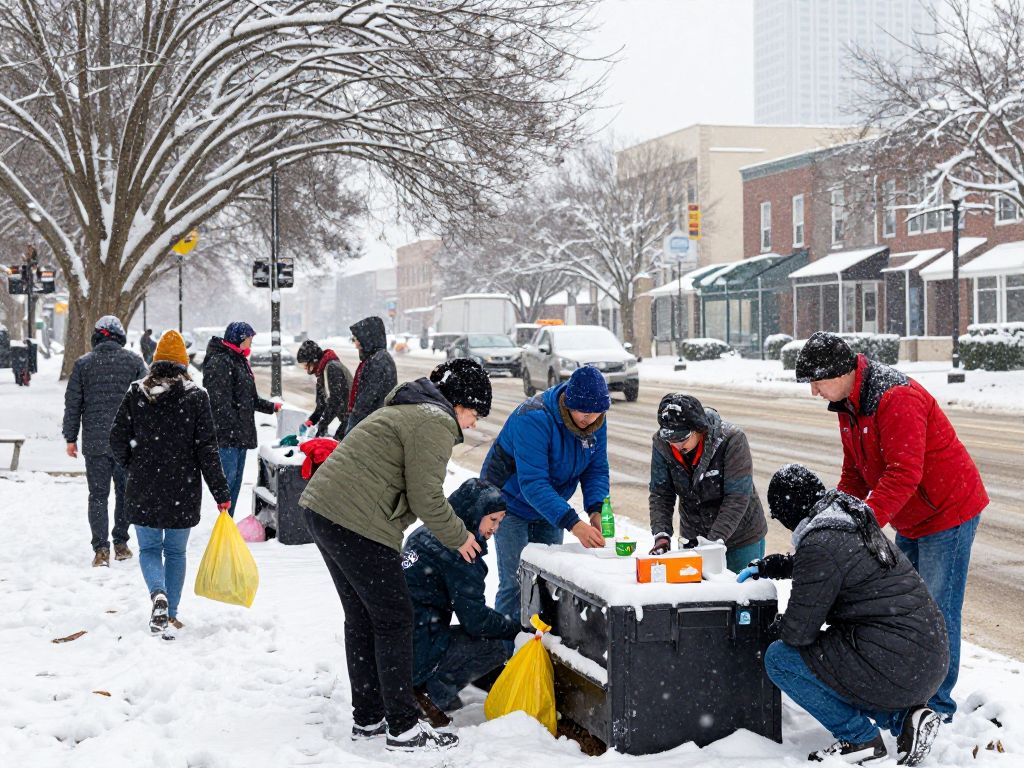
The Greater Houston area demonstrated remarkable resilience during a significant winter storm, showcasing strong local coordination and community self-reliance. The event tested the effectiveness of civic engagement and rapid mobilization of resources, allowing essential services to be maintained and support provided to vulnerable populations. Swift actions by government agencies, community organizations, and private entities highlighted the importance of collaboration in navigating harsh weather conditions.
Houston
Houston’s Winter Resilience: Local Action Shines
As a significant winter storm brought icy conditions and freezing temperatures, the Greater Houston area showcased robust local coordination and a strong spirit of community self-reliance, effectively addressing the challenges posed by severe weather. The comprehensive response highlighted the benefits of proactive civic engagement and the rapid mobilization of local resources.
The recent winter storm served as a critical test for Houston’s preparedness and the efficacy of community-led initiatives. While challenging, the event underscored how streamlined local administration, combined with the personal initiative of residents and private sector partnerships, can foster a resilient environment capable of navigating unexpected disruptions. This collaborative approach ensured essential services were maintained and vulnerable populations received necessary support, demonstrating the strength found in decentralized action and mutual aid.
The prompt specifically mentions “Postponed meetings, government closures and warming center openings to know across the Greater Houston area” as the core topic. I need to make sure the article addresses this while maintaining the required tone and structure.
The January 2026 Winter Storm: A Test of Preparedness
In late January 2026, the Greater Houston area faced an arctic blast as part of a major North American winter storm, unofficially named “Winter Storm Fern.” Forecasters warned of extremely cold temperatures, with wind chill values potentially dropping as low as -5°F to 15°F, and a prolonged period of freezing temperatures was imminent. The storm brought freezing rain and ice accumulation, creating hazardous road conditions and increasing the risk of power outages. Temperatures began to drop significantly late on Saturday, January 24, with rain transitioning to winter precipitation early Sunday, January 25, and icy conditions persisting through Monday, January 26, and into Tuesday morning.
Government Agencies and Swift Action
In response to the severe weather, government entities across the Greater Houston area took prompt action to ensure public safety. The City of Houston Municipal Courts were closed on Monday, January 26. Many area school districts, including Houston ISD, canceled classes and activities, prioritizing the safety of students and staff. Harris County Tax Office locations also closed, and several public attractions adjusted their operations; the Houston Zoo closed, and Space Center Houston implemented a delayed opening at noon on Monday, January 26, with some outdoor exhibits and NASA Tram Tours not operating for safety reasons. The University of Texas MD Anderson Cancer Center also had a delayed opening, with in-person patient appointments beginning at noon. These swift decisions by local authorities minimized risks and allowed residents to prepare and seek shelter.
Community and Private Sector Mobilization
The winter storm prompted an extensive network of support from community organizations and the private sector, demonstrating the power of individual initiative and voluntary associations. The City of Houston activated numerous warming centers, with Mayor John Whitmire announcing that all city warming centers would open to provide shelter. Many of these centers, including Acres Home Multi-Service Center, Kashmere Multi-Service Center, Fonde Community Center, Metropolitan Multi-Service Center, Southwest Multi-Service Center, and Sunnyside Multi-Service Center, operated 24 hours a day to assist those in need. Additional multi-service centers like Fifth Ward, Northeast, Moody, Denver Harbor, Magnolia, and Third Ward also served as warming centers. The Bayland Community Center specifically functioned as a 24-hour warming shelter.
Beyond municipal efforts, private entities and non-profit organizations played a crucial role. Northside Baptist Church in Texas City and First Assembly Church in Bacliff opened as shelters in Galveston County, offering respite from the cold. Non-profit organizations such as Star of Hope prepared for an influx of individuals and families, distributing essential supplies, while Covenant House focused on providing warmth and basic needs for homeless youth. Mission of Yahweh extended its services, offering comprehensive support including food and shelter. Fort Bend County libraries and the Fort Bend Family YMCA also served as warming centers, alongside Brazoria County libraries. The Salvation Army in Conroe provided a 24-hour warming station. These diverse contributions highlight a robust ecosystem of local leadership and private partnerships that efficiently augmented public resources. For those requiring transportation to warming centers, the City of Houston provided assistance via 311, and Fort Bend County offered similar services through a dedicated helpline. Many warming centers allowed pets, often requiring them to be in kennels.
Beyond Immediate Shelter: Sustaining Community Well-being
The response to the winter storm extended beyond immediate emergency measures, revealing sustained civic innovation in fostering long-term community well-being. CenterPoint Energy mobilized its crews to manage power infrastructure, successfully maintaining service for over 99% of its 2.9 million customers across 12 counties in the Greater Houston area, even releasing over 500 contractors to aid harder-hit regions in other states. This level of preparedness and efficiency from a vital private utility demonstrated effective planning and resource allocation. The Houston Harris County Winter Storm Relief Fund, a community initiative, provided grants to non-profit partners focused on assisting vulnerable families, including those without insurance or ineligible for federal aid, showcasing a dedication to individual recovery. The 211 Texas/United Way HELPLINE served as a critical resource, connecting residents with vital information and support services 24/7. These ongoing efforts emphasize the importance of flexible support structures that empower individuals and communities to rebuild and strengthen independently after significant events.
Lessons in Local Leadership and Coordination
The January 2026 winter storm underscored the immense value of responsive local leadership and adaptable community coordination. By allowing city and county departments, alongside private and non-profit organizations, the flexibility to tailor their responses to specific local needs, the Greater Houston area demonstrated a model of efficient and effective disaster management. The rapid activation of warming centers, the provision of transportation, and the ongoing support from various funds and helplines illustrate how individual and organizational initiatives, when empowered by a supportive local framework, can deliver immediate relief and lay the groundwork for sustained recovery without undue bureaucratic hurdles. This emphasis on local choice and collaboration ultimately boosts civic engagement and strengthens the fabric of the community.
Conclusion
The Greater Houston area’s response to the January 2026 winter storm stands as a testament to the power of community resilience, personal initiative, and effective local leadership. From the swift opening of warming centers to the dedicated efforts of non-profits and the efficient operations of private utilities, Houstonians rallied to support one another through challenging conditions. These events highlight how active participation and a commitment to local solutions are paramount in building and maintaining a thriving, prepared community. We encourage all residents to continue engaging with local initiatives, supporting community programs, and fostering the spirit of self-reliance that makes Greater Houston truly exceptional.
Keywords: Houston TX events, Greater Houston community, winter storm response, local leadership, civic engagement
Frequently Asked Questions (FAQ)
What was the primary weather event affecting Greater Houston in January 2026?
The Greater Houston area was affected by a major North American winter storm in January 2026, unofficially named “Winter Storm Fern.”
What were the anticipated weather conditions during the storm?
Forecasters anticipated extremely cold temperatures, with wind chill values potentially dropping as low as -5°F to 15°F, alongside a prolonged period of freezing temperatures, freezing rain, and ice accumulation.
Which government entities announced closures or delayed openings in the Greater Houston area on Monday, January 26, 2026?
The City of Houston Municipal Courts, Harris County Tax Office locations, the Houston Zoo, and many area school districts including Houston ISD announced closures. Space Center Houston and The University of Texas MD Anderson Cancer Center had delayed openings.
What types of warming centers were opened across the Greater Houston area?
A variety of warming centers were opened, including city multi-service centers, community centers like Bayland Community Center, churches such as Northside Baptist Church and First Assembly Church, county libraries in Fort Bend and Brazoria counties, and facilities operated by non-profits like Star of Hope and the Salvation Army.
Was transportation available to warming centers?
Yes, transportation to warming centers was available by calling 311 for the City of Houston and a dedicated helpline for Fort Bend County.
How did the private sector contribute to the storm response?
The private sector contributed through efforts such as CenterPoint Energy maintaining power for a vast majority of customers and deploying crews, and non-profit organizations like Star of Hope, Covenant House, and Mission of Yahweh providing shelter, supplies, and services.
What support was available for individuals affected by the winter storm beyond immediate shelter?
The Houston Harris County Winter Storm Relief Fund provided grants to non-profit partners assisting vulnerable families, including those without insurance or ineligible for federal aid. The 211 Texas/United Way HELPLINE connected residents with vital information and support services.
Key Features of the Greater Houston Winter Storm Response
| Feature | Details | Scope |
|---|---|---|
| Event | January 2026 North American Winter Storm (“Winter Storm Fern”) | Nationwide |
| Affected Area | Greater Houston area, including surrounding counties like Harris, Fort Bend, Brazoria, and Galveston | State-level (Texas) |
| Key Weather Impact | Extremely cold temperatures, wind chills as low as -5°F to 15°F, hard freeze, freezing rain, ice accumulation | State-level (Texas) |
| Government Closures (Jan 26, 2026) | City of Houston Municipal Courts, Harris County Tax Office, Houston Zoo, many area school districts (e.g., Houston ISD) | Local (Greater Houston area) |
| Delayed Openings (Jan 26, 2026) | Space Center Houston, The University of Texas MD Anderson Cancer Center | Local (Greater Houston area) |
| Warming Centers | Numerous city multi-service and community centers, churches, county libraries, non-profit facilities (e.g., Star of Hope, Salvation Army) | Local (Greater Houston area) |
| Transportation to Centers | Available via 311 (City of Houston) and a helpline (Fort Bend County) | Local (City of Houston, Fort Bend County) |
| Pet Policy at Centers | Pets allowed at official City of Houston shelters, often in kennels | Local (City of Houston) |
| Power Infrastructure Response | CenterPoint Energy maintained service for >99% of 2.9 million customers across 12 counties; deployed crews; released contractors to other states | Local (Greater Houston area), Nationwide (aid to other states) |
| Community Aid Funds | Houston Harris County Winter Storm Relief Fund provided grants to non-profit partners | Local (Houston Harris County) |
| Information & Resources | 211 Texas/United Way HELPLINE for critical information and community resources | State-level (Texas) |
Deeper Dive: News & Info About This Topic
HERE Resources
Water Line Break in Houston’s Galleria Area
Texas Communities Prepare for Winter Weather Challenges
University of Texas at Austin Announces Temporary Campus Closure
New Resiliency Hub Boosts Northeast Houston’s Future
Harris County Early Voting Hours Adjusted Due to Winter Storm
Aggies School Basketball Adjusts Game Time Against Gamecocks
Family Sues Harris County and Sheriff Over Inmate Death
Webb County Sheriff Indicted on Embezzlement Charges
Major Traffic Accident in Dickinson Results in Fatalities
Houston Winter Chill: Weekend Events Shift

Author: STAFF HERE HOUSTON TX WRITER
The HOUSTON STAFF WRITER represents the experienced team at HEREHouston.com, your go-to source for actionable local news and information in Houston, Harris County, and beyond. Specializing in "news you can use," we cover essential topics like product reviews for personal and business needs, local business directories, politics, real estate trends, neighborhood insights, and state news affecting the area—with deep expertise drawn from years of dedicated reporting and strong community input, including local press releases and business updates. We deliver top reporting on high-value events such as Houston Livestock Show and Rodeo, Art Car Parade, and Chevron Houston Marathon. Our coverage extends to key organizations like the Greater Houston Partnership and Houston Area Urban League, plus leading businesses in energy and healthcare that power the local economy such as ExxonMobil, Schlumberger, and Houston Methodist. As part of the broader HERE network, including HEREAustinTX.com, HERECollegeStation.com, HEREDallas.com, and HERESanAntonio.com, we provide comprehensive, credible insights into Texas's dynamic landscape.