

Houston, January 1, 2026
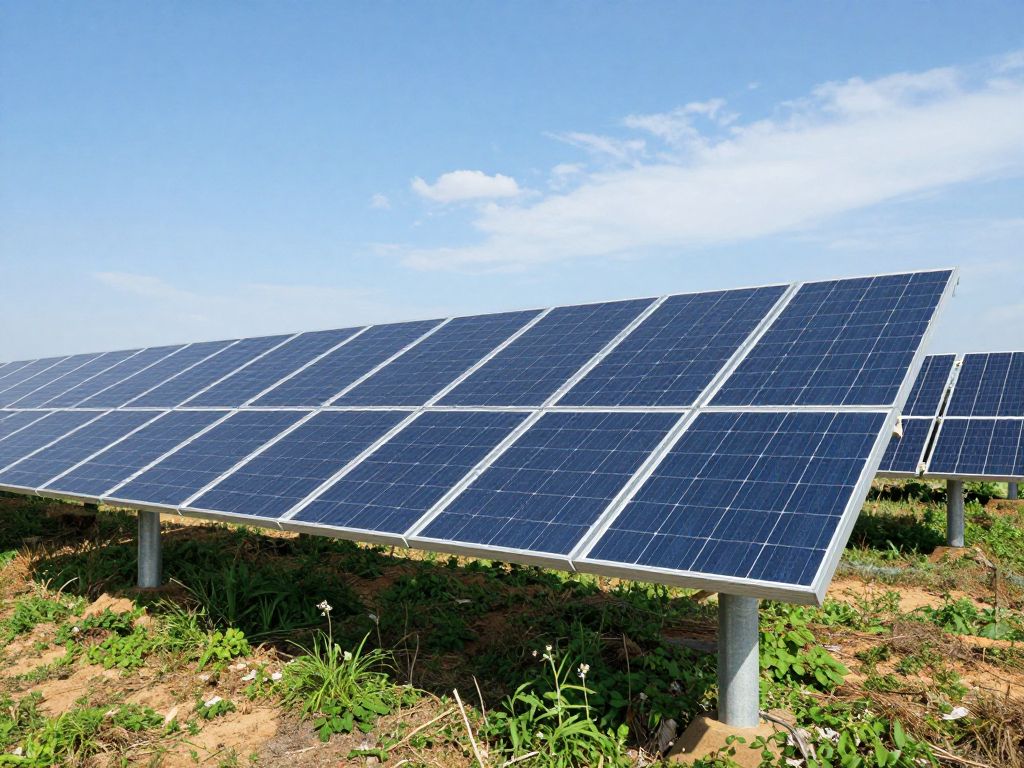
The U.S. solar industry is demonstrating resilience amidst policy changes, with a focus on technological innovation and operational efficiency. As the sector adapts, leaders anticipate significant growth from retrofitting existing solar assets and expanding energy storage deployment. The entrepreneurial spirit within local businesses, particularly in Texas, is seen as vital for harnessing new opportunities and fostering economic growth in the clean energy landscape.
Houston, TX –
U.S. Solar Navigates Policy Shifts, Drives Growth Through Innovation
The United States solar industry is entering 2026 with a renewed focus on technology innovation, operational efficiency, and retrofitting existing assets. After a year marked by policy uncertainty, the sector is adapting, demonstrating resilience and a strategic approach to growth. While shifting U.S. policy continues to influence development strategies nationwide, industry leaders anticipate that the modernization of existing solar sites and expanded energy storage deployment will emerge as pivotal drivers for advancement in the year ahead.
Here in Houston and across Texas, this national trend resonates deeply. The entrepreneurial spirit and innovative drive of local businesses and individuals are crucial to adapting to these shifts and capitalizing on new opportunities. As the industry evolves, the determination of small businesses and the benefits of a dynamic regulatory environment will be key to fostering sustained economic growth and job creation within the clean energy landscape.
Policy Shifts and Market Adaptation Nationwide
The U.S. solar industry is actively navigating an evolving policy landscape, which has influenced project timelines, financing structures, and procurement strategies nationwide. Uncertainty surrounding trade policy, incentives, and regulatory frameworks has compelled companies to reassess risk, tighten operational discipline, and prioritize flexibility in project planning. For instance, the removal of the Section 25D customer-owned investment tax credit (ITC) for residential solar systems is expected to contribute to a slowdown in residential installations in the coming years, even though the long-term outlook remains positive. Forecasts suggest that utility-scale and distributed solar installations between 2026 and 2030 could see a reduction of 27% due to new policies and executive orders.
Despite these challenges, the industry has become more resilient and strategic. There has been a notable increase in investment in domestic manufacturing and supply chain localization, a move aimed at reducing reliance on overseas suppliers, improving lead times, and better aligning with U.S. content requirements. A significant policy change is the accelerated phase-out of the 30% tax credit for residential solar, which is now scheduled to expire in 2026. Additionally, a critical deadline of July 4, 2026, requires solar projects larger than 1.5MW to demonstrate “physical work of a significant nature” to secure expiring IRA tax credits; failure to meet this benchmark will shorten the completion timeline to the end of 2027.
Technological Innovation Driving Efficiency Nationwide
Innovation is not merely an option but a necessity for the solar sector as it matures, making it more predictable, resilient, and unified nationwide. A significant area of opportunity for the next year is the retrofitting of existing solar assets with modern technology. As a substantial portion of U.S. solar capacity ages, owners are increasingly evaluating upgrades that can extend system life, improve performance, and increase returns without the complexities associated with new greenfield development.
Energy storage is poised to play a crucial role in the next phase of solar growth nationwide, evolving from an optional add-on to a core component of solar infrastructure in 2026. Integrating storage with both new and existing solar installations can improve grid flexibility, enhance project economics, and support broader energy transition goals. Advanced technologies like perovskite solar cells, with pilot projects anticipated in 2025-2026, promise breakthroughs in cost and performance. Some companies are working to offer utility-scale tandem panels in 2026 that could achieve at least 6% higher efficiency. Furthermore, smart home and smart grid integration are becoming standard, with most new solar systems in 2026 expected to feature integrated software platforms connecting panels, batteries, electric vehicle chargers, and other appliances. The demand for longer-duration energy storage is also growing, shifting from a niche solution to a strategic necessity due to factors such as AI-driven load growth and the increasing power demands of data centers.
Entrepreneurial Spirit and Small Business Resilience Nationwide
The U.S. solar industry is characterized by its vibrant entrepreneurial landscape, encompassing over 10,000 businesses nationwide. These businesses are significant contributors to job growth across various fields, including research and development, manufacturing, installation, and maintenance. Particularly impactful are “mid-sized” installers, which are recognized for their focus on long-term relationships with homeowners and business owners. These companies typically do not outsource their portfolios to operations and maintenance providers, maintaining a nimble and attentive approach deeply rooted in their communities. As quality and service become increasingly critical in a maturing market, these mid-sized installers are expected to remain central to the industry’s growth beyond 2026.
Government initiatives like the Small Business Innovation Research (SBIR) and Small Business Technology Transfer (STTR) programs play a vital role. These competitive funding opportunities encourage U.S.-based small businesses to undertake high-risk, innovative research and technology development with strong potential for future commercialization. For these entrepreneurs, adopting solar energy offers significant advantages, including the ability to lower operational costs and enhance brand image through sustainable practices. Emerging business models, such as leasing options and power purchase agreements, are also making solar more accessible and affordable for Texas TX entrepreneurs and small businesses, reducing large upfront costs.
Economic Growth and Investment in the Lone Star State
The U.S. solar industry has been a powerful engine for economic growth, generating over $70 billion in private investments nationwide in 2024. Looking ahead, renewable investment is projected to reach approximately $442.2 billion between 2025 and 2030 across the nation. Texas stands out as a critical market for solar deployment, with growth driven by state procurement targets, distributed generation policies, and large-scale utility contracting.
The outlook for solar capacity in Texas is robust. Nearly 23 gigawatts (22,991 MW) of additional solar capacity is anticipated to come online by 2026. By 2030, the total solar capacity in the state could reach approximately 40.9 gigawatts. This impressive pipeline, with over 23,700 megawatts of solar projects already announced or under construction, underscores strong industry confidence in the region. Importantly, Texas is projected to surpass coal in solar generation in 2026, marking a significant shift in its energy landscape. This substantial growth in solar energy across the state has also spurred solar energy innovation in grid management and energy storage solutions. Battery systems are increasingly vital, assisting in balancing frequency, stabilizing voltage, and preventing outages.
Regulatory Environment and Future Growth Nationwide
The policy shifts of recent years, while presenting challenges, have ultimately compelled the U.S. solar industry to become more resilient and strategic. Developers are now crafting business models that can adapt more rapidly to regulatory changes, a development that is ultimately strengthening the sector nationwide. Despite these policy adjustments and cost pressures related to tariffs, renewable energy is projected to remain the primary driver of capacity growth in the U.S. power sector through 2035.
Encouragingly, forecasts indicate that all net new generating capacity in 2026 is expected to be provided by renewable energy sources and batteries. By October 31, 2026, the combined capacity of all renewables, including small-scale solar, could almost equal that of natural gas and account for over 36% of total U.S. generating capacity. The continuing high demand for new energy supply and rising power prices further solidify the fundamental market conditions for new solar projects in the long term, promising sustained momentum for the industry.
In conclusion, the U.S. solar industry is demonstrating remarkable adaptability and innovation in the face of evolving policy. The emphasis on new technologies, retrofitting, and the vital role of small businesses underscores a dynamic and resilient sector. For Houston TX business owners and citizens, these national trends, coupled with Texas’s leading role in solar deployment, signify a future rich with opportunity for job creation, technological advancement, and sustainable economic growth. Supporting our local businesses and fostering an environment of innovation will ensure Houston remains at the forefront of this energy evolution.
Stay engaged, support local businesses, and contribute to Houston’s thriving economic future.
Frequently Asked Questions
What is the outlook for the U.S. solar industry in 2026?
The U.S. solar industry is entering 2026 with a renewed focus on technology innovation, operational efficiency, and retrofitting existing assets.
How are policy shifts affecting the U.S. solar industry?
Shifting U.S. policy continues to influence development strategies, including project timelines, financing, and procurement strategies. Uncertainty around trade policy, incentives, and regulatory frameworks has pushed companies to prioritize flexibility and operational discipline.
What role does technology play in the growth of the solar industry?
New technologies are making solar more predictable, resilient, and unified as the sector matures nationwide. Retrofitting existing solar assets with modern technology is a major opportunity, and energy storage is set to become a core component of solar infrastructure in 2026.
How are small businesses contributing to the solar industry’s growth?
The U.S. solar industry has over 10,000 businesses, contributing to job growth across various fields. “Mid-sized” installers, known for their long-term relationships and community roots, are expected to be central to the industry’s growth beyond 2026.
What is Texas’s contribution to U.S. solar growth?
Texas is a key market for solar deployment. Nearly 23 gigawatts (22,991 MW) of additional solar capacity is expected to come online in Texas by 2026, and the state is poised to surpass coal in solar generation in 2026.
Key Features of the U.S. Solar Outlook for 2026
| Feature | Description | Scope |
|---|---|---|
| Industry Focus | Renewed focus on technology innovation, operational efficiency, and retrofitting existing assets. | Nationwide |
| Policy Impact | Shifting policies influence development strategies, leading to greater resilience and strategic planning. Residential tax credits are expiring. | Nationwide |
| Technological Drivers | Retrofitting of aging solar assets, integration of energy storage as a core component, and advancements like perovskite solar cells. | Nationwide |
| Small Business Role | Over 10,000 U.S. solar businesses contribute to job growth. Mid-sized installers are central to growth through long-term relationships and quality service. | Nationwide |
| Economic Investment | Over $70 billion in private investments nationwide in 2024. Renewable investment projected to reach around $442.2 billion between 2025 and 2030. | Nationwide |
| Texas Growth | Nearly 23 GW of additional solar capacity expected by 2026. Texas is poised to surpass coal in solar generation in 2026. | State-level |
| Future Capacity | All net new generating capacity in 2026 is forecast to be provided by renewable energy sources and batteries. | Nationwide |
Deeper Dive: News & Info About This Topic
HERE Resources
Federal Energy Credits Expire: Essential Insights for Homeowners
Abundia Global Impact Group Emerges as Energy Innovator
Former Sunnova CEO Launches Solar Repair Startup in U.S.
Houston Companies Partner for Renewable Energy Data Centers
Construction Industry Faces Challenges Amid Innovation
Gilbane Building Welcomes New Vice President John Bonney
Brownsville’s $100 Million Manufacturing Investment
Solaris Oilfield Infrastructure Rebrands to Solaris Energy Infrastructure
Pulsar Fusion Expands to Austin, Texas
Dallas Advances in Solar Energy with T1 Energy’s Milestone

Author: STAFF HERE HOUSTON TX WRITER
The HOUSTON STAFF WRITER represents the experienced team at HEREHouston.com, your go-to source for actionable local news and information in Houston, Harris County, and beyond. Specializing in "news you can use," we cover essential topics like product reviews for personal and business needs, local business directories, politics, real estate trends, neighborhood insights, and state news affecting the area—with deep expertise drawn from years of dedicated reporting and strong community input, including local press releases and business updates. We deliver top reporting on high-value events such as Houston Livestock Show and Rodeo, Art Car Parade, and Chevron Houston Marathon. Our coverage extends to key organizations like the Greater Houston Partnership and Houston Area Urban League, plus leading businesses in energy and healthcare that power the local economy such as ExxonMobil, Schlumberger, and Houston Methodist. As part of the broader HERE network, including HEREAustinTX.com, HERECollegeStation.com, HEREDallas.com, and HERESanAntonio.com, we provide comprehensive, credible insights into Texas's dynamic landscape.