

Houston, December 31, 2025
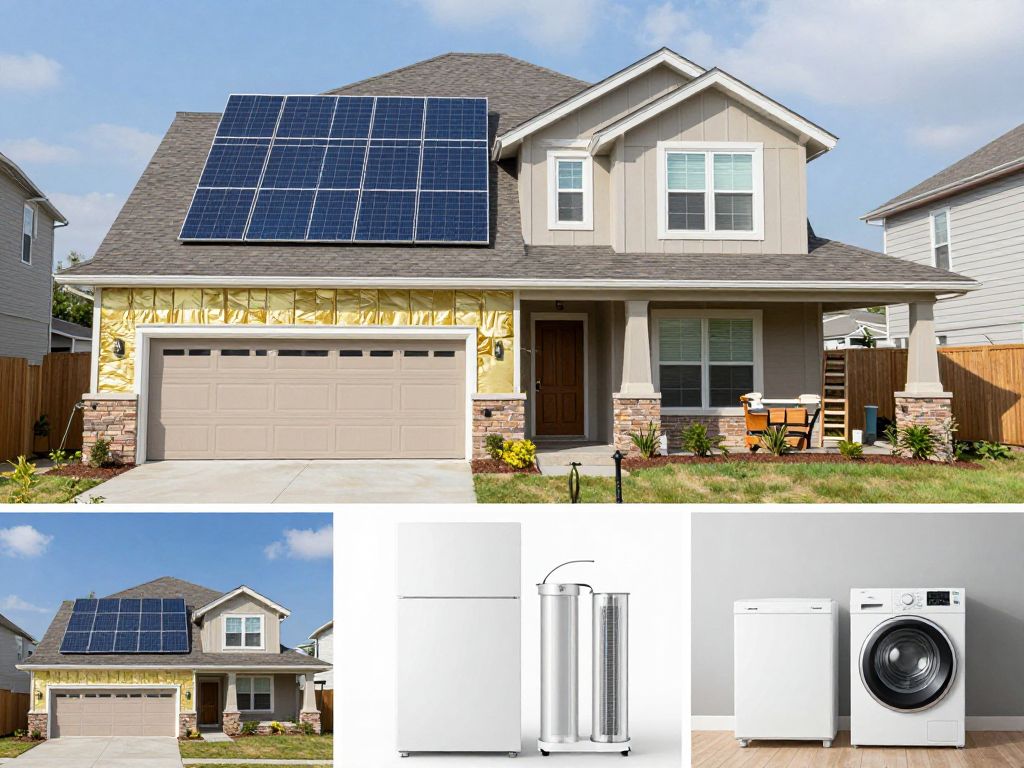
As the December 31 deadline approaches, homeowners must act quickly to take advantage of federal tax savings on energy-efficient upgrades. With crucial federal clean energy tax credits set to expire, informed decision-making is vital for those investing in homes. The Energy Efficient Home Improvement Credit and Residential Clean Energy Credit create opportunities for significant savings while supporting local economies. Homeowners should ensure projects are completed before the deadline to maximize benefits.
Houston
Federal Energy Credits Expire Dec 31: What You Need to Know
As the year-end deadline approaches, homeowners across the nation face a critical window to claim significant federal tax savings on energy-efficient upgrades before key incentives sunset. This moment underscores the importance of informed decision-making for those looking to invest in their homes and contribute to broader economic resilience.
For entrepreneurs and homeowners alike, making smart investments that yield long-term benefits is a cornerstone of financial prudence. The approaching expiration of key federal clean energy tax credits highlights the dynamic nature of economic incentives and the need for individuals to act decisively to maximize opportunities. These programs, designed to encourage energy efficiency and the adoption of clean energy technologies, have provided substantial financial relief, empowering property owners to enhance their homes while fostering innovation within various industries nationwide.
Understanding the Energy Efficient Home Improvement Credit (Section 25C)
The Energy Efficient Home Improvement Credit, also known as Section 25C, provides a nationwide opportunity for homeowners to reduce their tax liability by investing in eligible energy-efficient upgrades to their existing homes. This credit is designed to make a wide range of improvements more accessible, encouraging property owners to enhance comfort and reduce energy consumption.
Homeowners can claim 30% of the project cost, with an annual cap of $3,200 for all eligible improvements. Specifically, individuals may claim up to $2,000 for qualified heat pumps, heat pump water heaters, and biomass stoves or biomass boilers. Beyond these major appliance upgrades, an additional $1,200 is available for other energy-efficient improvements. These include energy-efficient exterior doors (up to $250 per door, with a $500 annual limit), exterior windows and skylights (up to $600 annually), insulation, and home energy audits (up to $150). Certain systems like central air conditioners, furnaces, and boilers also qualify for 30% of costs, up to $600 per item, with an overall limit of $1,200 for these specific items, as do electric panel upgrades, capped at $600.
Exploring the Residential Clean Energy Credit (Section 25D)
Complementing efforts towards a cleaner energy future, the Residential Clean Energy Credit, or Section 25D, has enabled homeowners nationwide to invest in renewable energy systems. This credit allows taxpayers to claim 30% of the cost of qualified clean energy property installed at a primary or secondary residence. Importantly, renters may also qualify if they reside in the home where the equipment is installed.
The range of eligible clean energy systems includes solar electric panels, solar water heaters, wind turbines, geothermal heat pumps, fuel cells, and battery storage technology. A significant benefit of this credit is that for most of these systems, there is no annual dollar cap, which can lead to substantially larger tax savings for higher-cost installations. This particular credit applies to new or existing homes located within the U.S. The credit is nonrefundable.
The Accelerated Deadline: Why Now Is Critical
The urgency surrounding these tax credits stems from a recent legislative change. While initially extended by the Inflation Reduction Act, the “One Big Beautiful Bill Act” (OBBBA), signed in July 2025, accelerated the termination date for both the Residential Clean Energy Credit and the Energy Efficient Home Improvement Credit. Both are now set to expire on December 31, 2025. This change has created a critical, albeit compressed, window for homeowners to act.
To qualify for these federal tax credits, eligible projects must be not only purchased but also fully installed, operational, and “placed in service” by the December 31, 2025 deadline. The Internal Revenue Service (IRS) strictly interprets this requirement; deposits or signed contracts alone are insufficient to secure the credit. This means that any energy-efficient upgrades or clean energy installations must be completed and functioning within the homeowner’s residence before the year concludes. Homeowners planning to claim these credits will need to file IRS Form 5695, Residential Energy Credits, with their federal tax return for the year the property is placed into service.
This accelerated timeline has naturally led to increased demand for contractors and equipment, highlighting the responsiveness of the market to clear, albeit temporary, incentives. Homeowners are encouraged to schedule installations promptly, as backlogs and permitting delays can impact project completion before the deadline.
Empowering Homeowners and Local Economies
The federal clean energy tax credits have served as a catalyst for individual action, encouraging homeowners to make prudent investments that enhance their properties and reduce utility costs. This spirit of personal achievement through smart economic choices resonates deeply within Houston, TX business circles and among Texas TX entrepreneurs.
By investing in energy-efficient upgrades, homeowners not only improve their own financial outlook but also stimulate activity within the local economy. Houston small business owners, from HVAC technicians to solar panel installers and insulation specialists, benefit directly from the increased demand for their services. This private investment, driven by incentives that reduce upfront costs, fosters job creation and supports the resilience of local enterprises. The temporary nature of these credits also serves as a reminder that timely decision-making and engagement with market opportunities are crucial for maximizing benefits, both for individual households and the broader Houston community.
Conclusion
As December 31, 2025, rapidly approaches, Houstonians, like homeowners across the nation, have a finite window to leverage the significant federal tax credits available for energy-efficient home improvements and clean energy installations. These incentives represent a substantial opportunity for personal achievement through smart investment, directly contributing to more resilient homes and a stronger local Houston TX business environment. For those considering upgrades, acting swiftly to complete projects before the deadline is paramount.
We encourage all Houston homeowners to explore how these expiring federal tax credits can benefit their households and to engage with local Houston small business contractors to ensure projects are completed in time. Supporting local businesses through these endeavors not only helps individual homeowners save but also reinforces the entrepreneurial spirit that drives economic growth and community well-being across Texas TX.
Frequently Asked Questions
What are the two major federal energy tax credits set to expire on December 31, 2025?
The two major federal energy tax credits set to expire on December 31, 2025, are the Energy Efficient Home Improvement Credit (Section 25C) and the Residential Clean Energy Credit (Section 25D).
What is the maximum annual credit for the Energy Efficient Home Improvement Credit (Section 25C)?
The maximum annual credit for the Energy Efficient Home Improvement Credit (Section 25C) is $3,200 for all eligible improvements. This includes up to $2,000 for qualified heat pumps, heat pump water heaters, and biomass stoves or boilers, and an additional $1,200 for other improvements like energy-efficient doors, windows, skylights, insulation, and home energy audits.
What percentage of costs can be claimed for the Residential Clean Energy Credit (Section 25D)?
Taxpayers can claim 30% of the cost of qualified clean energy property installed under the Residential Clean Energy Credit (Section 25D).
By when must eligible projects be completed and “placed in service” to qualify for these tax credits?
Eligible projects must be fully installed, operational, and “placed in service” by December 31, 2025, to qualify for these federal tax credits. Deposits or signed contracts alone do not qualify.
What types of clean energy property are eligible for the Residential Clean Energy Credit (Section 25D)?
Eligible clean energy property for the Residential Clean Energy Credit (Section 25D) includes solar electric panels, solar water heaters, wind turbines, geothermal heat pumps, fuel cells, and battery storage technology.
Key Features of Federal Energy Tax Credits Expiring December 31, 2025
| Credit Name | Eligibility (Nationwide) | Maximum Benefit / Percentage | Eligible Improvements / Systems | Expiration Date | Key Requirement |
|---|---|---|---|---|---|
| Energy Efficient Home Improvement Credit (Section 25C) | Homeowners improving existing homes in the U.S. | 30% of project cost, up to $3,200 annually (specific sub-limits apply) | Heat pumps, heat pump water heaters, biomass stoves/boilers, energy-efficient doors, windows, skylights, insulation, home energy audits, central AC, furnaces, boilers, electric panel upgrades | December 31, 2025 | Property must be installed, operational, and placed in service by the deadline |
| Residential Clean Energy Credit (Section 25D) | Taxpayers installing clean energy property at primary or secondary residences in the U.S. (including renters if living in the home) | 30% of project cost (generally no annual dollar cap) | Solar electric panels, solar water heaters, wind turbines, geothermal heat pumps, fuel cells, battery storage technology | December 31, 2025 | System must be installed, operational, and placed in service by the deadline |
Deeper Dive: News & Info About This Topic
HERE Resources
Texas Entrepreneurs Innovate for Emergency Power Solutions
Houston Businesses & Families: Ready for Record Refunds?
Former Sunnova CEO Launches Solar Repair Startup in U.S.
What Are the Top 5 Trends in Houston Home Building for 2024?
Targa Resources Acquires Stakeholder Midstream for $1.25 Billion
Key Considerations for Custom Home Building in Houston
Houston Ranks High in Hard Work and Faces Startup Challenges
Houston’s Top-Ranked High Schools: A Comprehensive Overview
Construction Industry Faces Challenges Amid Innovation
Texas Faces Clean Energy Investment Setbacks Amid Challenges

Author: STAFF HERE HOUSTON TX WRITER
The HOUSTON STAFF WRITER represents the experienced team at HEREHouston.com, your go-to source for actionable local news and information in Houston, Harris County, and beyond. Specializing in "news you can use," we cover essential topics like product reviews for personal and business needs, local business directories, politics, real estate trends, neighborhood insights, and state news affecting the area—with deep expertise drawn from years of dedicated reporting and strong community input, including local press releases and business updates. We deliver top reporting on high-value events such as Houston Livestock Show and Rodeo, Art Car Parade, and Chevron Houston Marathon. Our coverage extends to key organizations like the Greater Houston Partnership and Houston Area Urban League, plus leading businesses in energy and healthcare that power the local economy such as ExxonMobil, Schlumberger, and Houston Methodist. As part of the broader HERE network, including HEREAustinTX.com, HERECollegeStation.com, HEREDallas.com, and HERESanAntonio.com, we provide comprehensive, credible insights into Texas's dynamic landscape.